
Tuesday, 14 January 2025: 9:30 AM
232 (New Orleans Ernest N. Morial Convention Center)
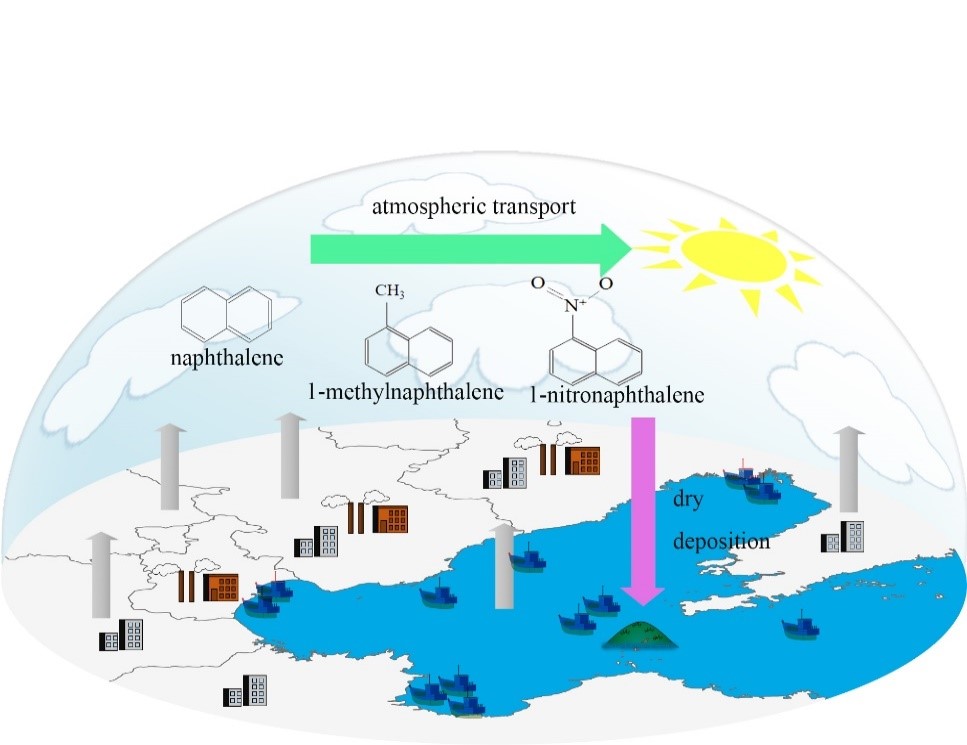
- Introduction: As a typical persistent toxic substances (PTS), polycyclic aromatic hydrocarbons (PAHs) have always attracted concern worldwide due to their persistence, toxic, bioaccumulation, and long-range atmospheric transport. Besides, alkylated PAHs and nitrated PAHs, as the derivatives of PAHs, are even more toxic than their parents. PAHs are ubiquitous in marine ecosystems, and atmospheric inputs play an important role in the transportation of PAHs from land to the sea. In addition to the air-seawater exchange between gaseous polycyclic aromatic hydrocarbons and the sea surface, the dry deposition of atmospheric particulate matter is another primary way for atmospheric PAHs to enter the marine environment. The Bohai Sea, an important inland sea in China, is a corridor for the exchange of substances between China's largest inland sea and the outer sea. It also transmits atmospheric pollutants from inland China and Asian and European continents to the Northwest Pacific Ocean. Beihuangcheng Island (BHC) is located in the center of the southeastern Bohai Sea and has a typical temperate marine monsoon climate. It is the original sink of the outflow PAHs in the ambient air. In this work, sixteen types of polycyclic aromatic hydrocarbons prioritised by the United States Environmental Protection Agency (USA, EPA) (Σ16PAHs), twelve types of alky-polycyclic aromatic hydrocarbons (Σ12A-PAHs), and twenty-five types of nitro-polycyclic aromatic hydrocarbons (Σ25N-PAHs) in total suspended particles (TSP) at BHC between 2019 and 2020 provided occurrence and dry deposition fluxes of PAHs and their derivatives. P-PAHs, A-PAHs, and N-PAHs were found in the particulate phase in the Bohai Sea Strait.
- Materials and Methods: A total of 164 samples (including forty-four TSP samples and twelve sets of 10 stages TSP samples) (>10 μm, 9.0-10 μm, 5.8-9.0 μm, 4.7-5.8 μm, 3.3-4.7 μm, 2.1-3.3 μm, 1.1-2.1 μm, 0.65-1.1 μm, 0.43-0.65 μm, <0.43 μm) were collected in BHC (120º55′E, 38º24′N) during Aug. and Oct. in 2019, Feb. and May. in 2020. The sampling site was situated on hills immediately adjacent to the seaside, at about 25 m above sea level and 2 m above the ground. GC-EI-MS/MS (Agilent 7890A-7000B) was used to quantify the target compounds of the P-PAHs and A-PAHs. Then N-PAHs were determined by GC-NCI-MS (Agilent 7890A-5975C).
- Calculation of Dry Deposition Flux: The dry deposition velocity of PAHs in atmospheric particles in the BHC was estimated in this study using the Slinn model, which was originally proposed for aerosol particles deposited on natural water surfaces. The Slinn model calculates the dry deposition velocity for a given particle size. The dry deposition flux of PAHs in TSP samples was calculated by summing the dry deposition flux of 10 stage particle sizes (Fd=ΣVd1*C1+Vd2*C2 +Vd3*C3 ···Vd10C10, Fd is the dry deposition flux, Vd1 to Vd10 means the dry deposition velocity of 10 stages samples, and C1 to C10 is defined as the concentration of 10 stage).
- Results: The results showed that the annual average concentration of Σ16PAHs, Σ12A-PAHs, and Σ25N-PAHs was 2547.2 ± 2399.5 pg m-3, 362.5 ± 239.8 pg m-3, and 92.4 ± 75.1 pg m-3, respectively. 2- and 3-rings of Σ16PAHs, Σ12A-PAHs, and Σ25N-PAHs were dominated in summer, while the proportions of 4-, 5-, and 6-rings were relatively high in winter. Oil combustion is the main source of PAHs and their derivatives in the atmosphere of BHC. PAHs and their derivatives reside in relatively fine particles of <0.65 and 0.65–1.1 μm. Based on observational data and traditional dry deposition models, the dry deposition fluxes of PAHs and their derivatives were estimated (Slinn). The annual average dry deposition flux of Σ16PAHs, Σ12A-PAHs, and Σ25N-PAHs was 75.37 ± 45.08 μg m-2 yr-1, 20.88 ± 8.29 μg m-2 yr-1, and 3.58 ± 1.61 μg m-2 yr-1, respectively.
- Discussions: The parent-PAHs' computed dry deposition fluxes and detected concentrations were one to two orders of magnitude greater than those of their derivatives. The concentration and dry deposition flux of particulate parent-PAHs in the Bohai Sea Strait were similar to those of other island areas worldwide, while greater concentrations of PAH derivatives were detected than in other areas. The concentrations of PAHs and their derivatives were significantly higher in the fall and the winter than in the spring and the summer because of the heating season in northern China, poor diffusion conditions, and low mixing heights. High-molecular-weight PAHs with four or more rings exhibited weak volatility (low vapour pressure), which was consistent with earlier research, and they were mostly found in the particulate phase. The seasonal distribution of dry deposition fluxes of parent-PAHs was highest in fall and lowest in winter. The concentrations of nitro and alkyl derivatives were highest in spring and lowest in summer. This is related to the particle size distribution of these pollutants. Generally, PAHs and their derivatives are distributed as fine particles, indicating their potential for widespread environmental dispersal and human exposure. PAHs originate from petroleum combustion, such as engine exhaust from fishing vessels travelling offshore and vehicle exhaust from land-based transmissions. Temperature and humidity showed negative correlations, while concentration and dry deposition flux showed a significant positive correlation.
- Conclusion: The occurrence and dry deposition fluxes of typical PTS pollutants in the Bohai Sea Strait were determined based on a long sampling period. Based on our findings, high concentrations of PAH derivatives were detected, exhibiting seasonal variation: parent-PAHs peaked in fall, nitro and alkyl derivatives in spring. PAH and derivatives primarily distribute in fine particles. And the main source of pollution is from oil combustion. 4- and 5-ring PAHs dominate parent-PAHs fluxes, 2-rings for alkyl-PAHs, and 2- and 4-rings for nitro-PAHs. We measured a sizable dry deposition flux of PAH derivatives in this work, which should help with future research on the fate of these pollutants and other environmental behaviors.
 - Indicates paper has been withdrawn from meeting
 - Indicates an Award Winner