
These two initiatives, though different in conception, can be integrated through many facets of NOAA science and communication. One way is by providing exposure and vulnerability data to highlight underserved and marginalized communities. Socioeconomic indicators, like the CDC’s Social Vulnerability Index (SVI) or the Census Bureau's Community Resilience Estimates (CRE) can be used to add additional context to see who is impacted by extreme weather and climate events. By adding this framework into current NOAA infrastructure, including NCEI’s climate reports, SPC’s convective outlooks, NHC’s Hurricane Threats and Impacts, and WPC’s Heat Risk, we can better understand who is adversely impacted by these events, and what our local partners can do about it when the next one arrives. This talk will showcase examples of this integration, including case studies such as the Summer 2023 Texas Heat, the Chicago Derecho of July 2024, and Hurricane Beryl. 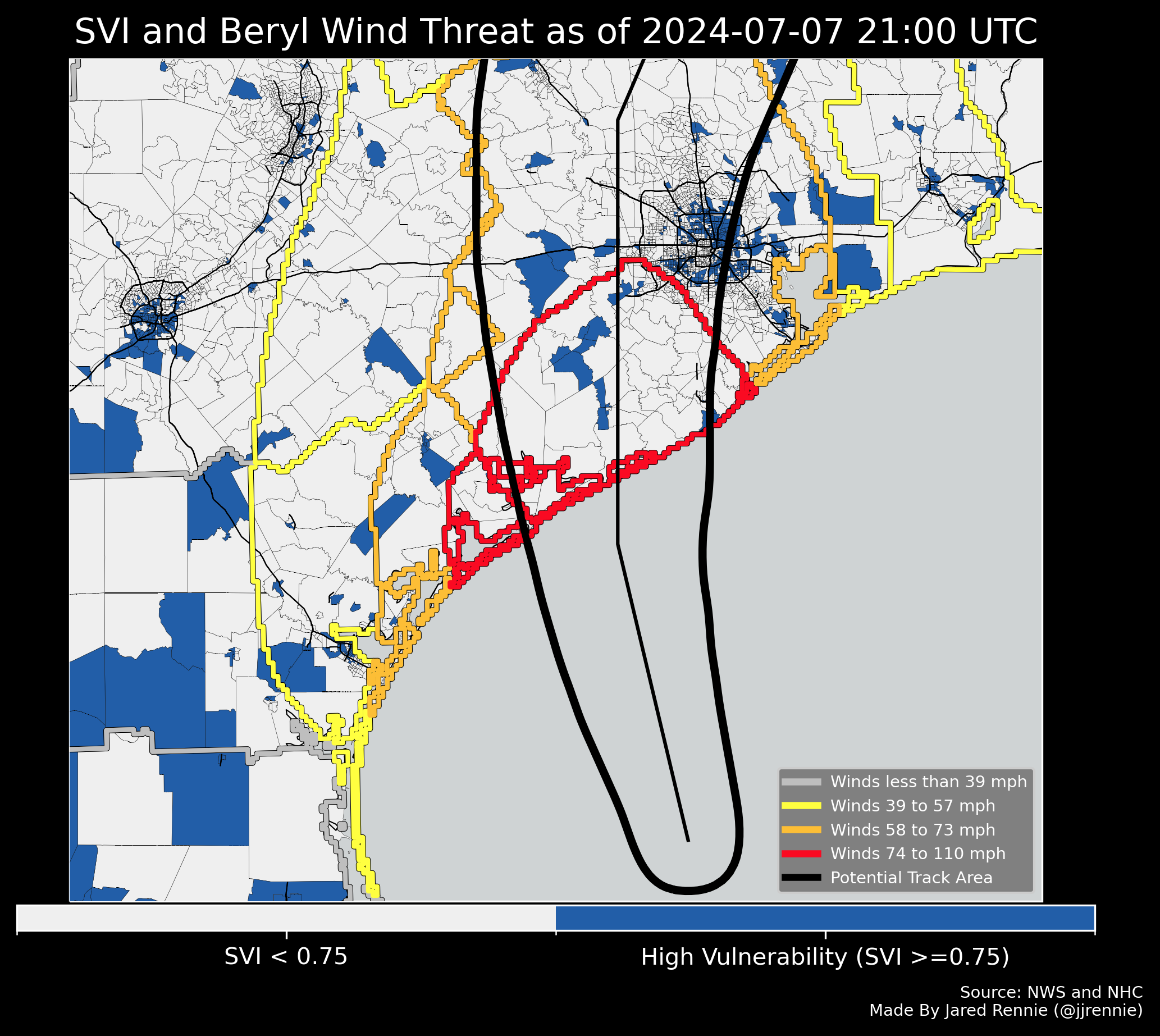
 - Indicates paper has been withdrawn from meeting
 - Indicates an Award Winner