
Tuesday, 14 January 2025
New Orleans Ernest N. Morial Convention Center
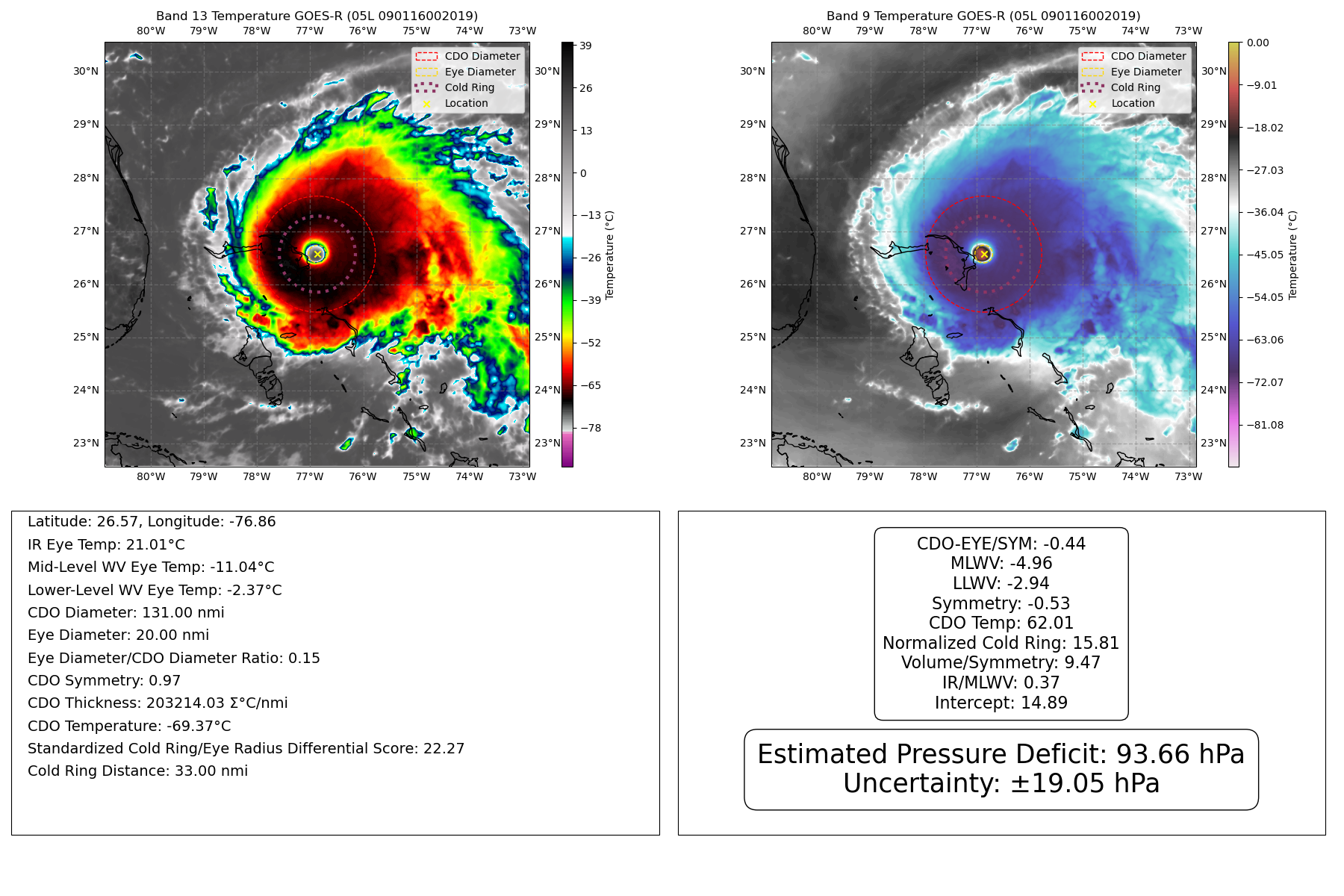
Hurricane intensity remains one of the most complex and elusive aspects of meteorology, with numerous mechanisms at play that are not yet fully understood despite decades of research. The advent of reconnaissance aircraft has enhanced our ability to gauge storm intensity, but coverage remains sporadic. Various satellite-based methods have been developed to fill in the gaps, parameterizing some of these mechanisms. Among these methods are subjective techniques like the Dvorak technique and objective algorithms such as the Advanced Dvorak Technique, the Advanced Microwave Sounding Unit (AMSU), and DMINT/D-PRINT. Despite their sophistication, these tools often conflict and are temporally inconsistent, leading to significant disparities in intensity estimates for certain hurricanes. These methods typically focus on estimating maximum sustained surface winds, a metric that itself is often contested. A promising aid for estimating hurricane intensity is the Satellite-based Hurricane Intensity Estimator (SHINE), which estimates central pressure deficit from the surrounding environmental air pressure. SHINE leverages nine significantly correlated independent predictors derived from satellite characteristics commonly observed in hurricanes, such as eye structure and central dense overcasts. By employing Bayesian Ridge Regression (BRR), these predictors are synthesized into a comprehensive model. The machine-learning approach of SHINE ensures adherence to established physical principles of atmospheric dynamics while maintaining computational efficiency, making it suitable for real-time applications. By utilizing satellite-derived predictors, SHINE offers consistent and accurate intensity estimates even in the absence of reconnaissance aircraft data, thus addressing a critical limitation of existing methods.
 - Indicates paper has been withdrawn from meeting
 - Indicates an Award Winner