Wednesday, 15 January 2025: 8:30 AM
344 (New Orleans Ernest N. Morial Convention Center)
David Schvartzman, ARRC / School of Meteorology, Norman, OK; and R. D. Palmer, M. Yeary, and M. Herndon
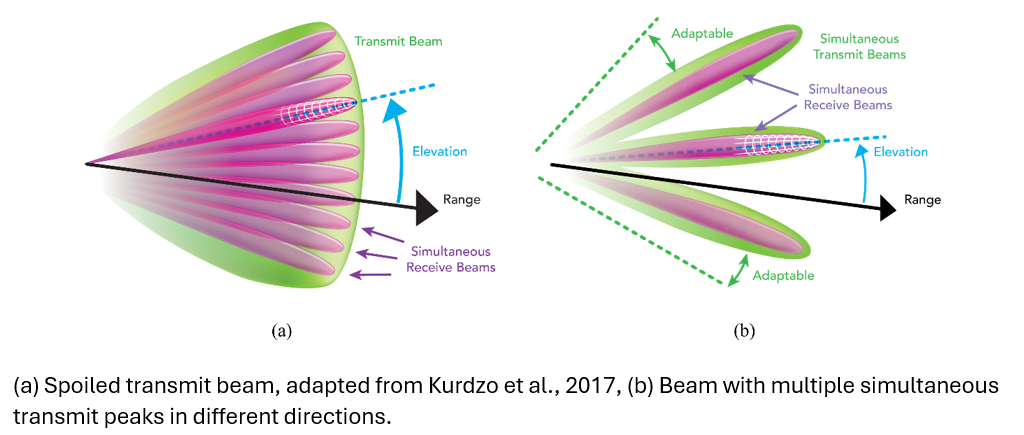
The implementation and validation of the multiple simultaneous transmit beams technique using the fully digital Horus radar represents a significant advancement in weather radar technology. This novel beamforming approach generates multiple transmit beams with peaks in different directions, enhancing temporal resolution without compromising spatial resolution (i.e., beamwidth and sidelobe levels). Our optimization algorithm, which derives phase-only beamforming coefficients is based on a hybrid method combining measured antenna element patterns and global optimization. It produces antenna patterns with superior sidelobe isolation and minimal loss in sensitivity (i.e., phase-only coefficients). The Horus radar’s capability to generate beams with peaks offset in both azimuth and elevation has been experimentally validated through rigorous point target tests and diverse meteorological observations, demonstrating precise beam pointing and high-quality polarimetric measurements.
This advanced beamforming technique offers substantial improvements over traditional spoiled beams by maintaining narrow and well-defined transmit beams, thereby minimizing two-way sidelobe levels and reducing potential contamination from strong reflectivity gradients. The Horus radar successfully captured significant meteorological features such as heavy precipitation cores, hail cores, mesocyclones, and potential tornadoes, providing unbiased and high-quality polarimetric data. These findings underscore the potential of the multiple simultaneous beams technique for next-generation weather radar systems, offering enhanced temporal resolution and superior data quality essential for accurate weather forecasting and severe weather detection. This presentation will delve into the optimization process, experimental validation, and the implications of these advancements for future weather surveillance systems.

- Indicates paper has been withdrawn from meeting

- Indicates an Award Winner
