
Microcom Design Inc. uses spectrum analyzers and Software Defined Radios (SDR) to track and document RFI events in the GOES DCS spectrum. The SDR along with a large hard drive has drastically improved the ability to track RFI events because it allows monitoring anomalies in the spectrum at any time in the past 30 days. The data gathered and sent through the GOES DCS is critical environmental data used to monitor and forecast weather some of the data include barometric pressure, temperature, wind speed, rainfall, water level, and evapotranspiration.
Over the past 4 years, Microcom Design Inc. has been closely monitoring and documenting multiple types and sources of RFI in the GOES DCS spectrum. An important advantage of adopting the SDR into the workflow is that it has enabled faster response times to critical events and added the ability to rewind the spectrum to inspect and document single-occurrence events, which is impossible with general-purpose spectrum analyzers. This capability allows us to better answer the question, "Was the loss of a message due to interference or did the platform not transmit?". The ability to replay captured data enables the creation of documents with spectrograms that provide clear and definitive evidence of RFI events. In addition, this tool has shown more subtle RFI from ionospheric scintillation in "good" messages, which raises questions about the current system’s detection threshold for this type of interference. The most impactful steps taken to mitigate RFI in the GOES DCS were to lock half of the receive systems onto the Primary Pilot signal and lock the other half of the receive systems to the Backup Pilot signal. This configuration change protects against the scenario where one of the pilot signals is disrupted by an RFI event. The dual pilots have been a part of the GOES DCS for over 15 years but it has not been employed in this way to protect against this type of RFI until the past 2 years when a LMR transmitter started disrupting the Primary Pilot signal.
We are investigating three additional methods to mitigate RFI and to harden the system. First, combining the received messages from two receive sites into a single stream with only the best messages being disseminated. Second, using the downlinks from the two satellites to fill in any missing or corrupted messages from each stream. The final mitigation method is to use a commercial geo-location service to which can narrow the geographic search area and aid in narrowing who to contact to find the operators of the offending transmitters.
Impacts from RFI in the GOES DCS spectrum are accelerating generating more corrupted and lost messages in the system. Steps have been taken to monitor and mitigate the RFI but more research is needed to further harden the system against these threats. Due to the open-loop nature of the GOES DCS, there is currently no system for quantifying the number of lost or missing messages due to RFI. This is one opportunity for improving the ability to track the impact of RFI.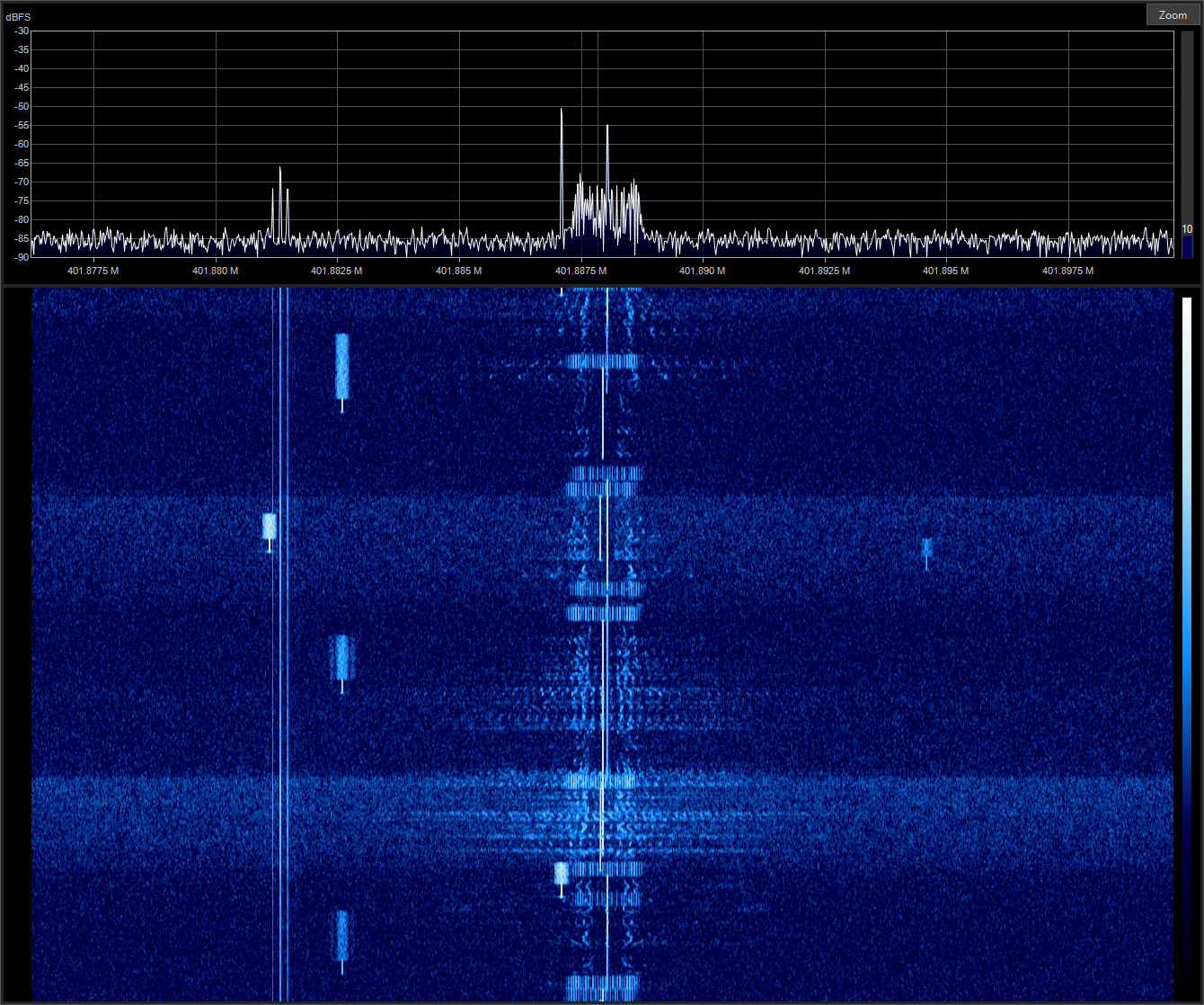
 - Indicates paper has been withdrawn from meeting
 - Indicates an Award Winner