
Monday, 13 January 2025
Hall C (New Orleans Ernest N. Morial Convention Center)
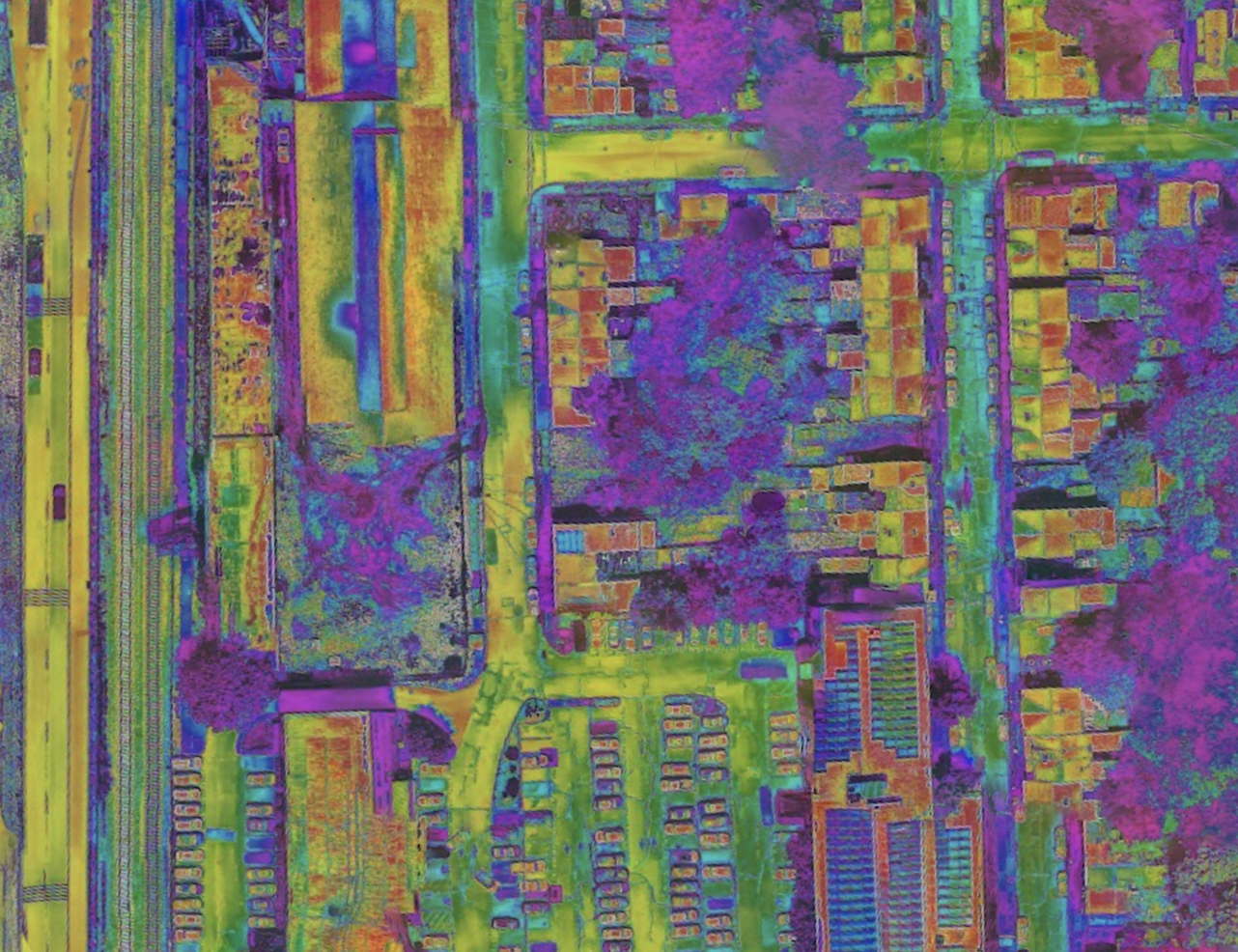
Trenton, New Jersey is located within the large urban corridor that stretches from Washington, DC to the northeast through Philadelphia, New York City, and Boston. Trenton is the capital of New Jersey, a city of roughly 90,000 residents, characterized by densely populated neighborhoods, a large array of government buildings, several large freeways, and bounded to the West by the Delaware River. Much of the housing stock and public infrastructure date to the first half of the 20th century when Trenton was a major industrial center. The density of the built environment in Trenton shares many similarities with other large cities like Philadelphia and New York, where detailed geographic structure of the local Urban Heat Island (UHI) has been much more thoroughly studied. Trenton is known to experience significant urban heating, but the details of neighborhood-scale effects have not been well-documented yet. In this project, we used LANDSAT-8 and LANDSAT-9 thermal IR images to examine the UHI of Trenton on a large scale. These thermal maps are then compared to mosaic imaging of individual Trenton neighborhoods created using an Autel EVO max 2 drone with a high-resolution IR camera, processed using a drone mapping software (Web ODM), to examine the UHI of Trenton on a smaller scale. As expected, concentrations of large parking lots, dense neighborhood blocks with black roofs, and industrial centers with impervious surfaces tend to contribute to intensity of the UHI effect. The high-resolution drone mapping highlights the small-scale heterogeneity of heat accumulation, as well as the dramatic cooling capacity of shade trees, green public parks, and bodies of water. Through this ongoing project, we hope to demonstrate the usefulness of drone thermal imaging in documenting the UHI effect in cities across the globe, as this is a method that has not yet been comprehensively leveraged. We also hope to improve the documentation of the UHI effect in Trenton in a way that allows policymakers, public health officials, and citizens to make decisions that improve environmental comfort within the city’s metropolitan area.
 - Indicates paper has been withdrawn from meeting
 - Indicates an Award Winner