
Wednesday, 15 January 2025: 9:15 AM
220 (New Orleans Ernest N. Morial Convention Center)
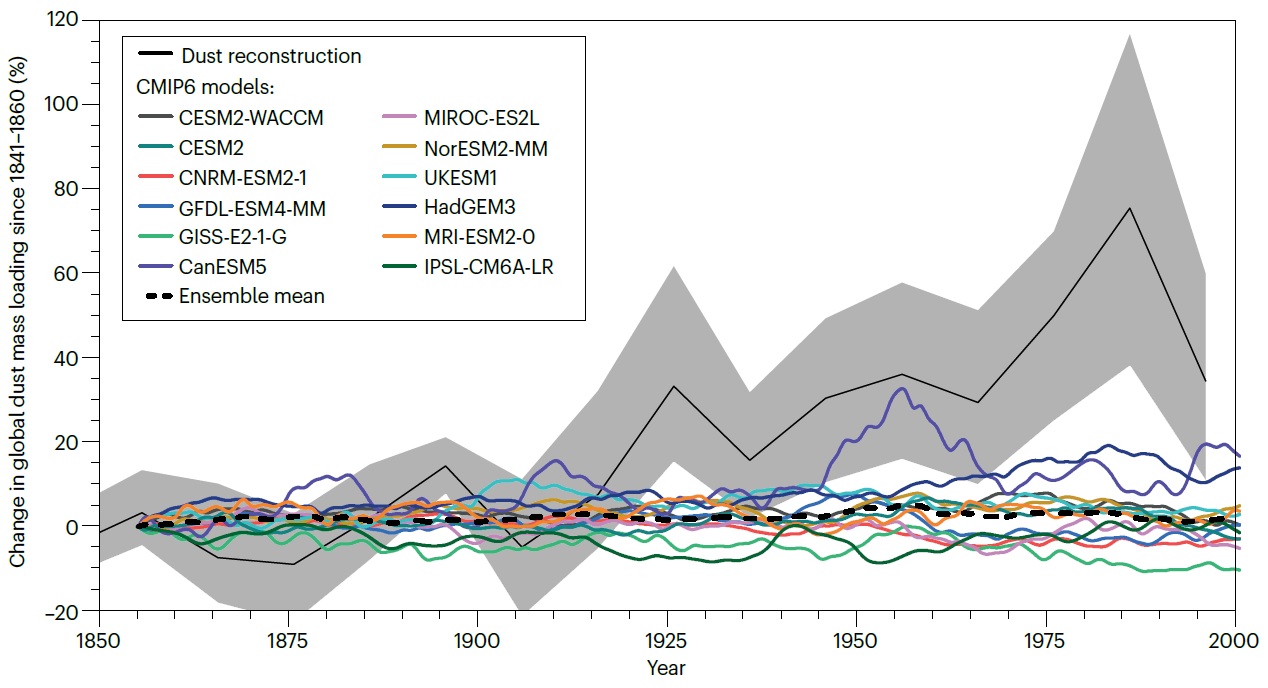
Mineral dust aerosols impact Earth’s energy budget through interactions with radiation, clouds, atmospheric chemistry, the cryosphere, and biogeochemistry. As such, past changes in mineral dust could have exerted a substantial radiative forcing of the climate system. We use dozens of records of dust deposition to reconstruct historical changes in dust and find that global dust mass loading is 55 ± 30% (90% confidence interval) higher in the modern climate than it was in pre-industrial times. We combine this finding with estimates of the radiative effects of the various mechanisms through which dust impacts climate, finding that the historical increase in dust produced a global mean effective radiative forcing of -0.07 ± 0.18 Wm-2. Current climate models and climate assessments do not represent the historical increase in dust and thus omit the resulting radiative perturbation, biasing climate change projections and assessments of climate sensitivity.
 - Indicates paper has been withdrawn from meeting
 - Indicates an Award Winner