
To this end, we will present multiple real strong and weak hurricane simulations using the Advanced Research WRF (ARW) model in the US. We modified the vertical eddy diffusivity based on the relative vorticity to accommodate the rotational dynamics of TCs in PBL schemes. While the default model significantly underpredicts hurricane intensity, our new adjustments outperform the default schemes for these strong hurricanes (see, e.g., attached fig. a), with notable improvements in track and minimum sea level pressure accuracy. This modification also remarkably increases the inflow in hurricanes compared to default models and leads to the intensification of the TC vortex (see, e.g., attached fig. b,c). Our newly adjusted model matched more closely with dropsonde, and satellite observations compared to the default WRF’s PBL schemes. These modifications to the PBL schemes make them more physics-based adjustments compared to previous treatments, offering valuable insights for improving hurricane forecasts in NWP models.
References
Khondaker, M. H., and M. Momen, 2024: Improving hurricane intensity and streamflow forecasts in coupled hydro-meteorological simulations by analyzing precipitation and boundary layer schemes. J Hydrometeorol, https://doi.org/10.1175/JHM-D-23-0153.1.
Matak, L., and M. Momen, 2023: The Role of Vertical Diffusion Parameterizations in the Dynamics and Accuracy of Simulated Intensifying Hurricanes. Boundary Layer Meteorol, https://doi.org/10.1007/s10546-023-00818-w.
Momen, M., M. B. Parlange, and M. G. Giometto, 2021: Scrambling and Reorientation of Classical Atmospheric Boundary Layer Turbulence in Hurricane Winds. Geophys Res Lett, 48, https://doi.org/10.1029/2020GL091695.
Romdhani, O., J. A. Zhang, and M. Momen, 2022: Characterizing the Impacts of Turbulence Closures on Real Hurricane Forecasts: A Comprehensive Joint Assessment of Grid Resolution, Horizontal Turbulence Models, and Horizontal Mixing Length. J Adv Model Earth Syst, 14, https://doi.org/10.1029/2021ms002796.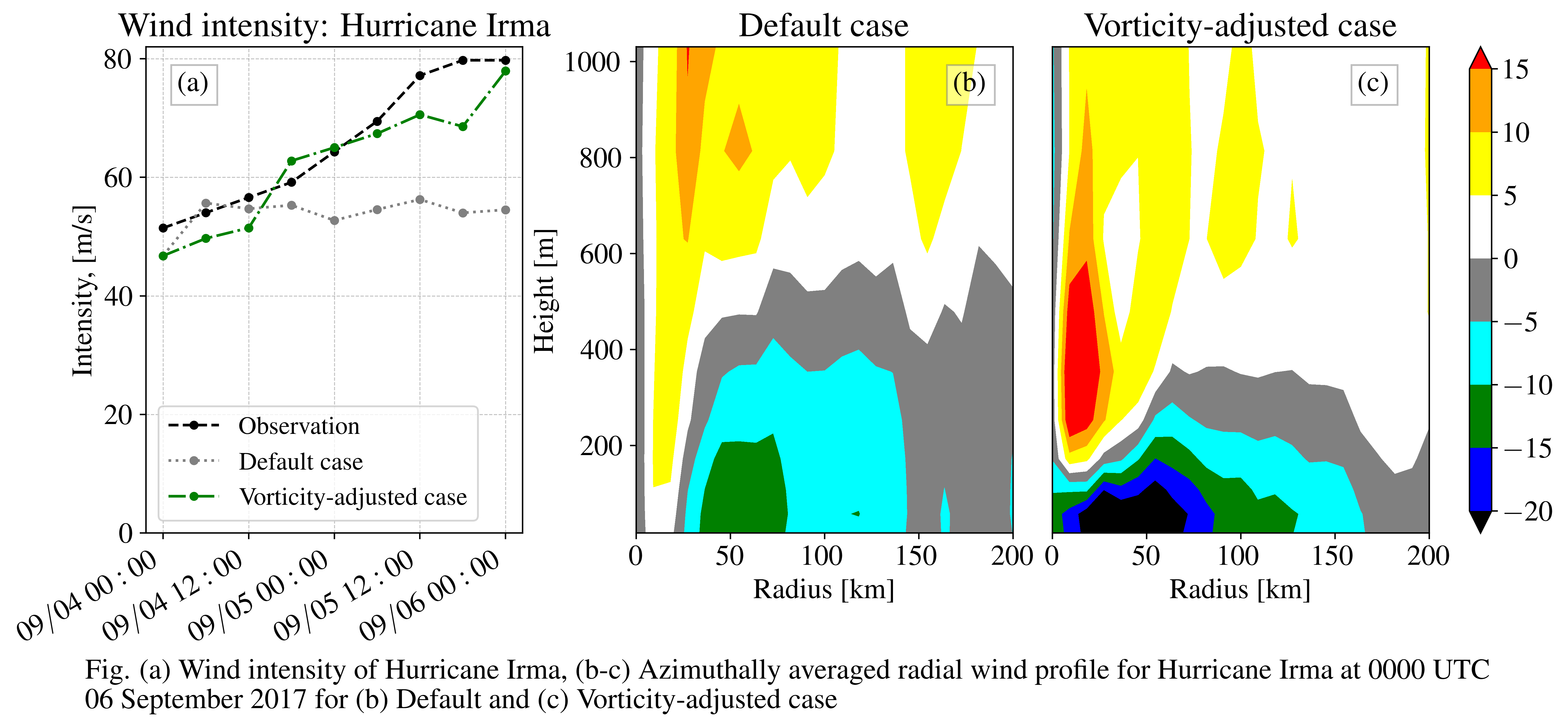
 - Indicates paper has been withdrawn from meeting
 - Indicates an Award Winner