
Tuesday, 14 January 2025: 9:15 AM
202 (New Orleans Ernest N. Morial Convention Center)
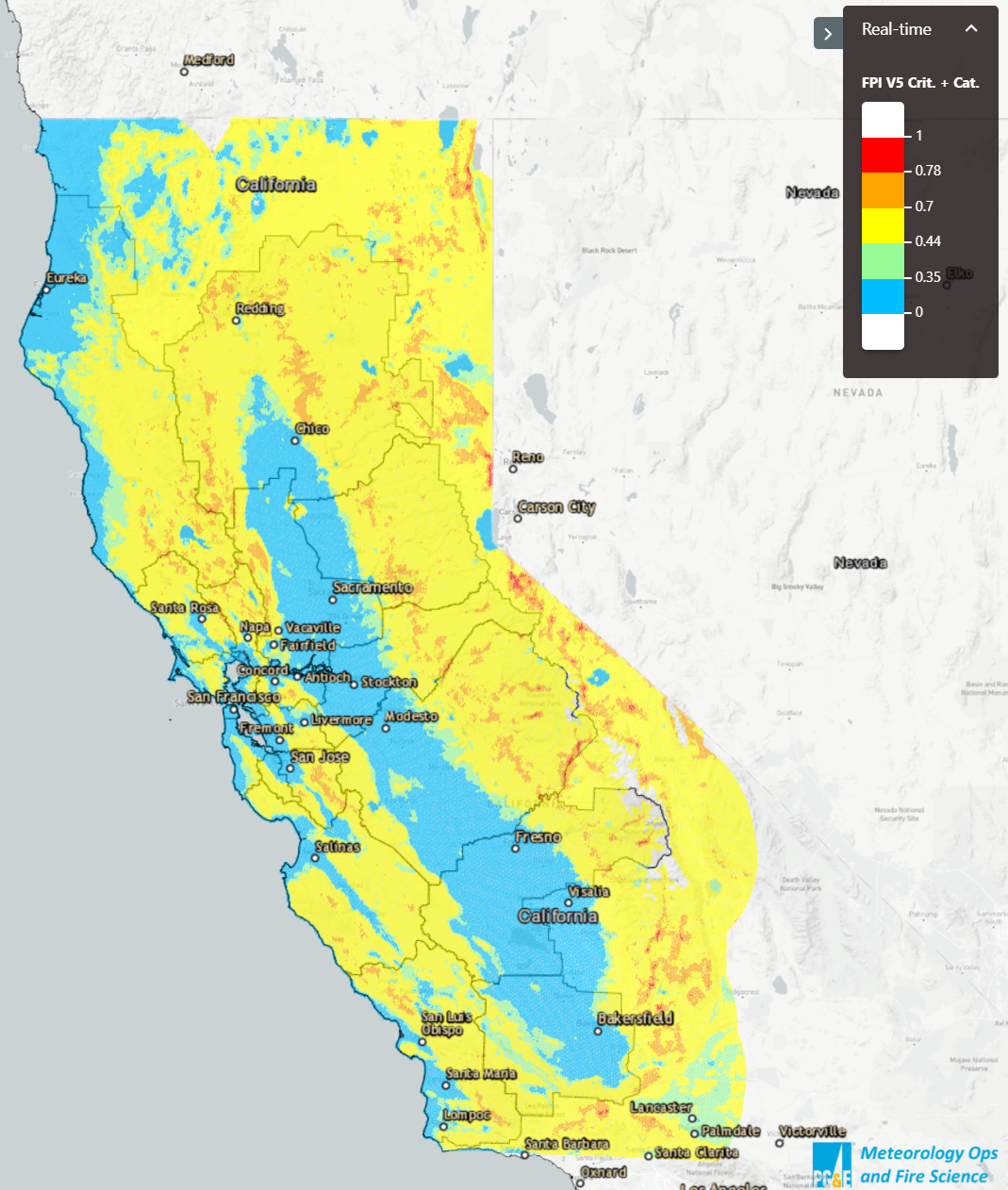
Wildfires pose a significant and persistent threat in California with climate change studies in agreement that the problem will continue in the future. Using emerging technologies and the development of various mitigation programs, utilities are working to reduce ignitions, help detect ignitions more quickly and limit the size of ignitions when they occur. Accurately predicting fire risk is critical for mitigating the impact of ignitions especially for utilities responsible for managing extensive infrastructure across fire-prone landscapes, while balancing cost and impacts to reliability these programs may create. To support critical operational decisions and provide business intelligence, utilities require a Fire Potential Index (FPI) that can accurately assess fire risk with high temporal and spatial resolution. Traditional fire indices, however, often lack the precision and adaptability needed to meet these demands in diverse and complex environments like those found in California. PG&E developed a novel FPI based on machine learning techniques. The model is trained using a 34-year 2-km resolution WRF downscaled reanalysis dataset, paired with a novel historical fire dataset, of historical sub-daily satellite fire detections and agency records, created by Sonoma Technology Innovations (STI) for PG&E. To develop this model, weather, fuel moistures and characteristics and terrain datasets were developed and analyzed in relation to daily/sub-daily fire growth. A 0.7 km^2 resolution hexagonal grid is used allowing the model to account for terrain and fuels information that is more granular than the 2 km weather model resolution. The machine learning model, a balanced random forest multi-classifier, was built and trained. The new FPI model shows increased skill over previous versions and is used to provide extremely high-resolution fire risk historical analysis and forecasts that is used for business intelligence and operational decisions. These findings demonstrate the potential of machine learning tools to enhance wildfire risk prediction and management for utilities. By offering a more precise and adaptable tool for predicting fire potential, this FPI significantly improves decision-making processes and guides operational execution, with the end goal of reducing the likelihood of catastrophic wildfire caused by utility operations.
 - Indicates paper has been withdrawn from meeting
 - Indicates an Award Winner