
Wednesday, 15 January 2025: 2:00 PM
218 (New Orleans Ernest N. Morial Convention Center)
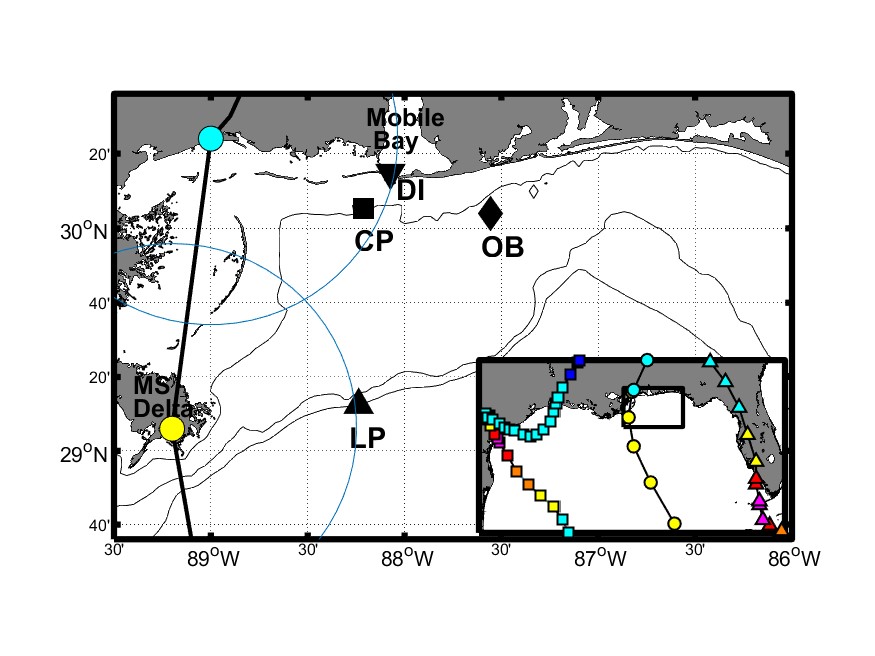
Interactions between the coastal ocean and tropical cyclones can affect storm intensity prior landfall as well as the seasonal transition from warmer, stratified summer conditions to well-mixed, cooler winter conditions. Understanding of the response of the coastal ocean to hurricane passage is limited due to the difficulty of collecting observations during such extreme events. Here, observations from monitoring stations from the shelf break to the coast were used in conjunction with various satellite sensors to investigate variability in shelf response to the passage of three hurricanes in the northern Gulf of Mexico during fall 2017. Hurricanes Harvey, Irma, and Nate, all impacted the Mississippi Bight region within a six-week span (late August -early October) when the fall transition typically begins. Two major sea surface temperature cooling events associated with tropical cyclones (Harvey and Irma) occurred over the shelf but the most direct storm event (Nate) had little thermal impact. The difference was attributable to low thermal disequilibrium and high translational speed which limited surface heat fluxes during the passage of Nate. Additionally, the storm-induced fall transition to cooler temperatures was interrupted in mid-September by a 10-day period of intense heating which allowed thermal conditions to recover and remain above 26oC into late October. Overall, the variability in the thermal response of the coastal ocean to tropical cyclones and the subsequent atmospheric conditions highlight the difficulties in predicting how shelf thermal condition will evolve during the peak of hurricane season in the northern Gulf of Mexico.
 - Indicates paper has been withdrawn from meeting
 - Indicates an Award Winner