
This study evaluates the current and future availability of water resources in the EEC using the Water Evaluation and Planning (WEAP) model. The study's objectives include assessing the impact of climate change on water resources under different scenarios, analyzing the potential benefits and risks associated with proposed water infrastructure projects—such as international water transfers—and providing concrete recommendations for sustainable water resource management in the region.
The EEC, located within the Bang Pakong River Basin and the Eastern Seaboard Basin, is expected to face substantial increases in water demand. Currently, water demand in the region stands at approximately 657.73 million cubic meters, with projections indicating a rise to 2,888 million cubic meters by 2027 and 3,089 million cubic meters by 2037. This study uses the WEAP model, developed by the Stockholm Environment Institute, to simulate water resource dynamics across the EEC.
Hydrological data from 2008 to 2023 were collected and analyzed, focusing on key reservoirs such as Khlong Si Yat, Bang Phra, Nong Pla Lai, and Prasae. These reservoirs were calibrated within the WEAP model to accurately reflect their performance. Future scenarios, covering the period from 2023 to 2049, were simulated using data from the Eastern Water Resources Management Plan (2019) and climate projections based on the SSP2-4 and SSP5-8 scenarios. Additionally, the study assessed the impact of a proposed water transfer project from Cambodia, planned for 2035.
The findings indicate that while the current water supply in the EEC is sufficient to meet short-term demands, without significant improvements in infrastructure and management strategies, the region could face severe water shortages in the future, particularly during drought years or under extreme climate conditions. The completion of planned water infrastructure projects by 2032 could alleviate some of this pressure, but certain years may still see water deficits. For instance, the SSP5-8 scenario projects an increase in water availability due to higher precipitation, yet this may not fully offset the rising demand. Conversely, the SSP2-4 scenario suggests a slight decrease in water availability compared to SSP5-8, underscoring the uncertainties associated with climate change impacts.
Given these challenges, the study highlights the urgent need for integrated water resource management in the EEC. To ensure long-term water security and support continued economic growth, several concrete strategies are recommended. First, promoting efficient water use by encouraging industries, agriculture, and households to adopt water-saving technologies and practices is crucial. This can be achieved through the use of water-efficient appliances, drip irrigation systems, and wastewater recycling.
Furthermore, investing in water-saving technologies is essential. Resources should be allocated to the development and deployment of technologies that reduce water consumption and enhance water reuse. Examples include desalination plants, rainwater harvesting systems, and smart water management tools. Additionally, raising public awareness through educational campaigns is vital. These campaigns should focus on the importance of water conservation and provide information on how individuals and communities can contribute to saving water.
Finally, strengthening regional cooperation is critical. Collaborating with neighboring regions and countries on water resource management, particularly in planning and implementing water transfers and infrastructure projects, will be necessary to address the EEC's water challenges effectively.
In conclusion, the results of this study emphasize the importance of proactive planning and investment in water infrastructure. By adopting these integrated management strategies, the EEC can develop a more resilient water management system that supports both environmental sustainability and economic growth.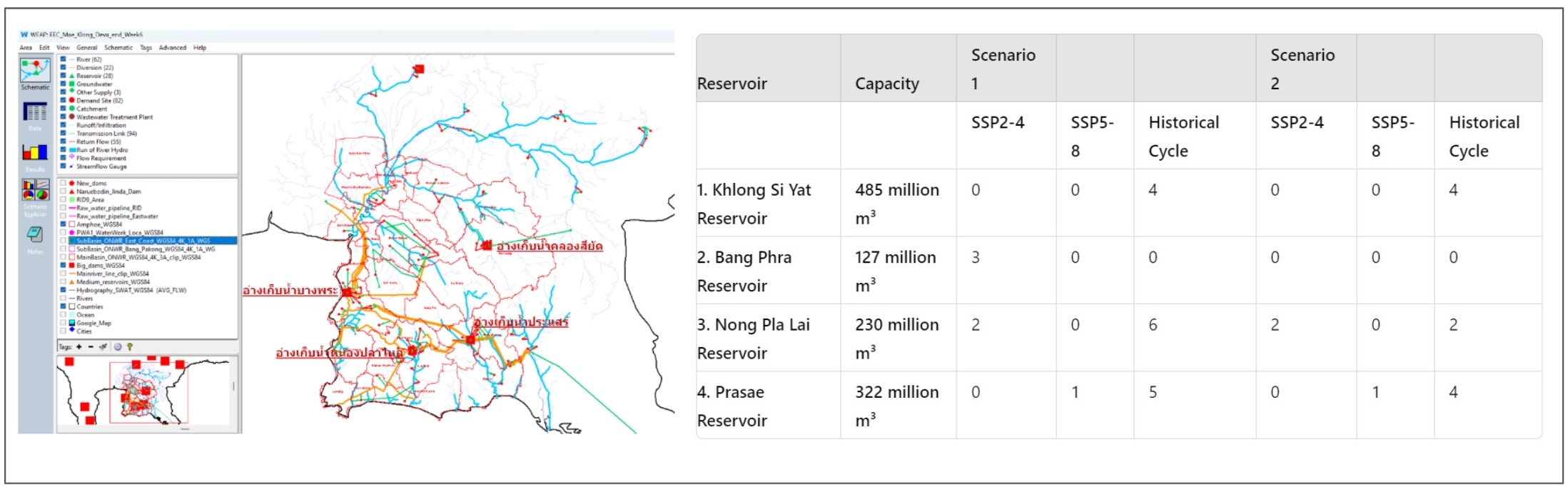
 - Indicates paper has been withdrawn from meeting
 - Indicates an Award Winner