
To explore other available ground-based PBL observing systems, a field project sponsored by National Science Foundation was conducted during 1-30 April 2024. Three NCAR/EOL MicroPulse Differential Absorption Lidars (MPDs) profiling calibrated aerosol backscatter and water vapor were deployed at three NYSM supersites with co-located profiling, fluxes, and surface meteorological measurements. An intensive observation period (IOP) was on 7-9 April for the 2024 TSE to study the atmospheric responses to the TSE. During the IOP, frequent radiosonde launches (every 30-60 minutes) were obtained at two sites in collaboration with the NASA-sponsored Nationwide Eclipse Ballooning Project (NEBP), and three uncrewed aircraft systems (UAS) were also deployed. One month of co-incident MWR and MPD data at three sites and an ASSIST infrared spectrometer at one site will enable us to evaluate their strengths and weaknesses and explore the potential to integrate the systems for optimal atmospheric temperature and humidity profile retrievals. The value of UAS for profiling the PBL will be also assessed and compared with the ground-based remote sensing instruments. The radiosonde data collected during the project will serve as a reference for validation. An OSE study is also planned to define the observation impact of the separate and combined profiling instruments.
This talk will focus on presenting the PBL instruments and the data from the field project, some preliminary results on intercomparisons of different instruments and OSE study, and the TSE’s impacts at the surface, in the PBL, and on surface fluxes and CO2 concentrations. The results will shed light on strategies for future mesoscale PBL observing systems.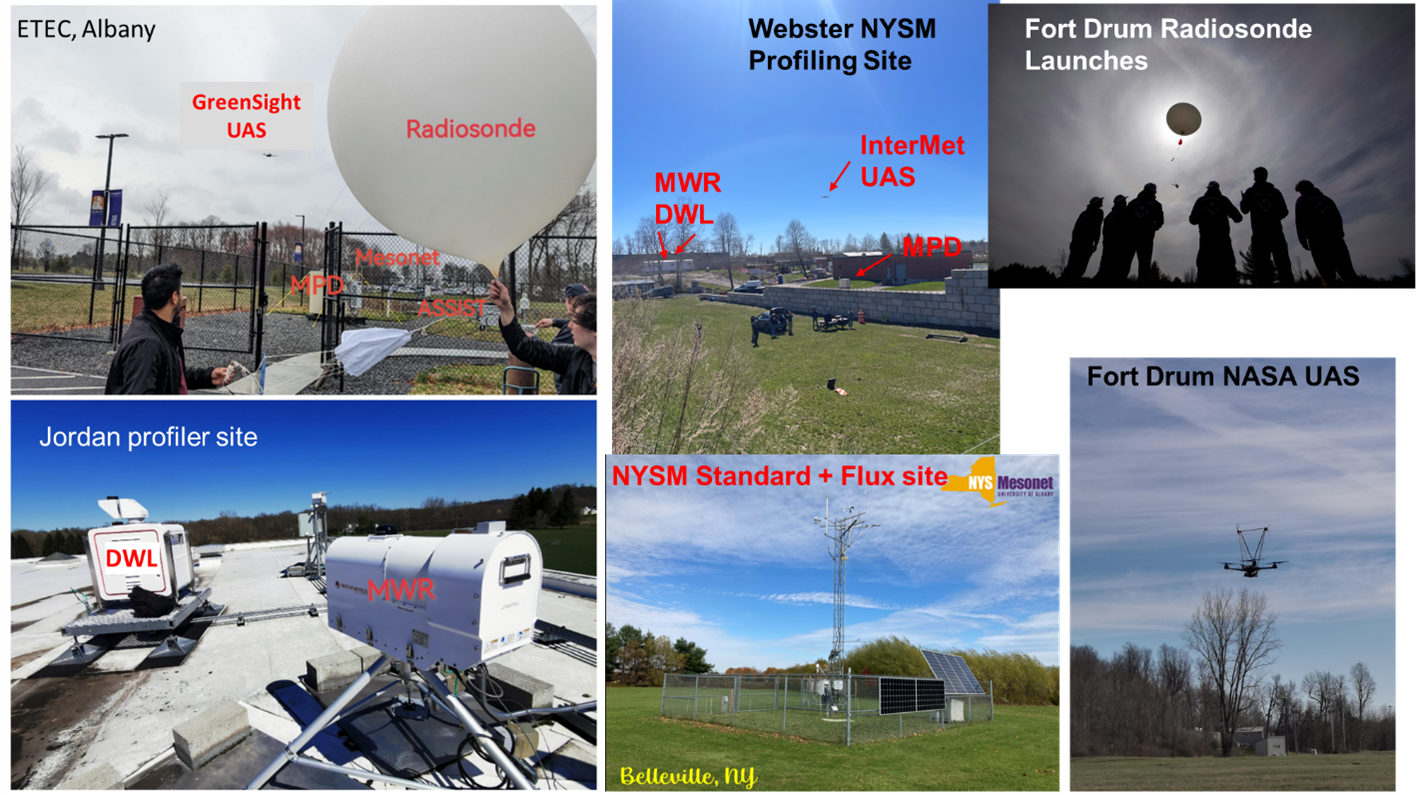
 - Indicates paper has been withdrawn from meeting
 - Indicates an Award Winner