
Monday, 13 January 2025
Hall C (New Orleans Ernest N. Morial Convention Center)
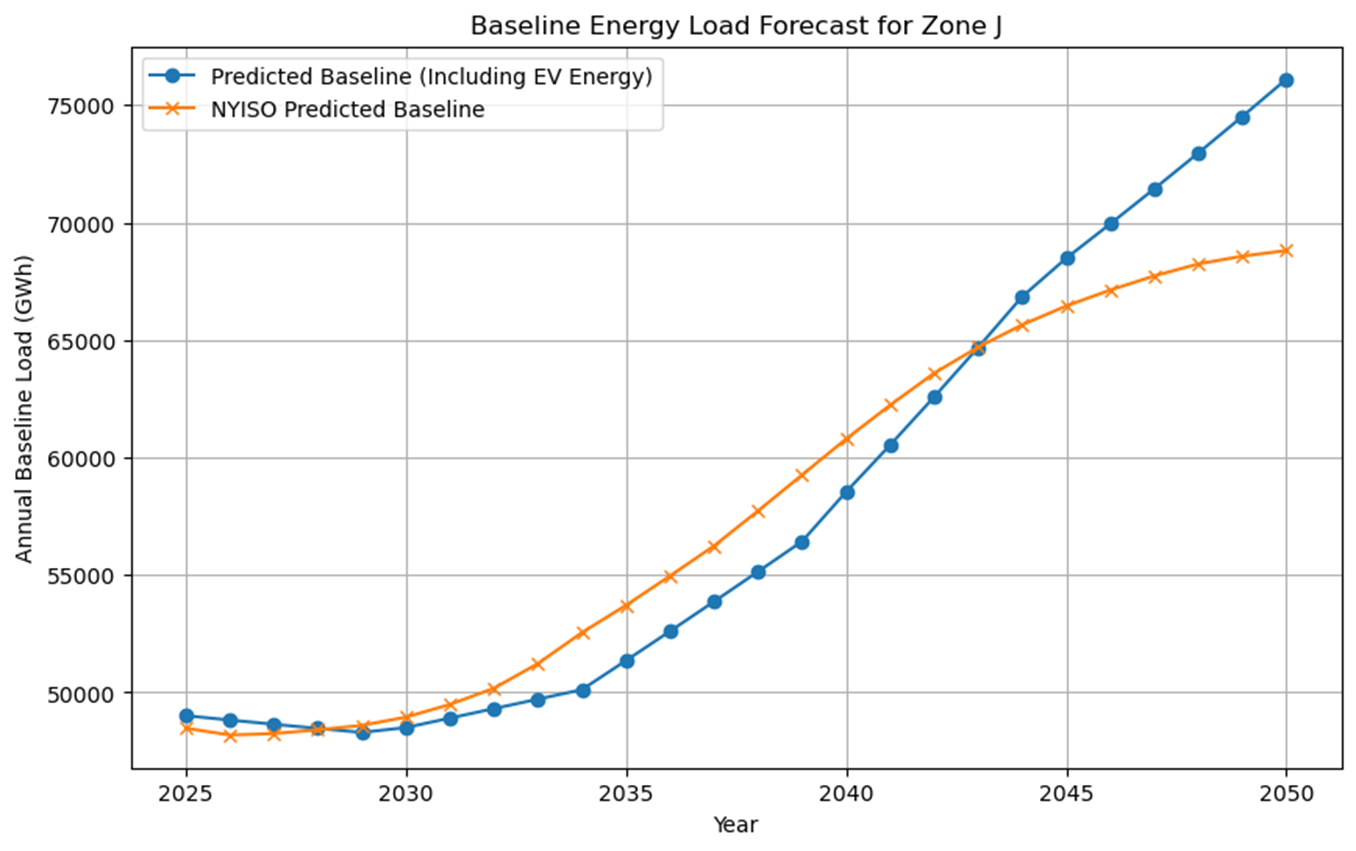
The challenge of projecting future energy demands on longer-term scales spans many disciplines and will only further prove to be as the century progresses. This is seen in the projected concurrent increase in intensity and frequency of heat waves due to climate change (which will put day-to-day pressures on the grid) and the expected mass electrification of gas-based appliances due to the adoption of decarbonized technologies such as electric space heating and electric vehicles (which will increase the overall demand significantly in the coming decades). This combined with the energy transition away from sources such as fossil fuels and increased reliability on weather-dependent energy sources such as solar and wind will pose a significant vulnerability to the grid. New York State is an exemplary case study of this transformation into a fully electrified energy infrastructure. Given upward demand pressures, the broader energy transition across the nation and the world will pose a substantial risk of disrupting everyday economic activities and threatening national security in a worst-case scenario. Recognizing the urgent need for tools and information that provide a better understanding of future energy landscapes, a collaboration between UAlbany Atmospheric Sciences Research Center (ASRC) and the New York Power Authority (NYPA) has been established to forecast future energy demands (2010-2050) across New York State considering decarbonization pathways, climate change, and population shifts scenarios. We are using both dynamic and statistical downscaling of climate projections under several IPCC Socio-Economic Pathways (SSPs) to correlate with energy demands across all New York Control Area (NYCA) zones and sub-stations of NYPA with particular attention to detail to inter-zone differences. This considers both baseline and weather/climate-dependent energy demands. Preliminary projections indicate an increase in peak energy demands of more than 100% in new winters (from the present time 25 GW) and 50% in summer (from current GW) due to electrification and a warmer climate. This presentation will delve into the specific methods used and our findings.
 - Indicates paper has been withdrawn from meeting
 - Indicates an Award Winner