
This presentation will emphasize GHRC’s efforts in visualizing datasets through the Field Campaign Explorer (FCX). The role of the DAACs is to enable users to conduct science with the archived data. This follows NASA’s role in supporting open science as well. The Field Campaign eXplorer (FCX) is an innovative cloud-based three-dimensional visualization and analysis tool. FCX caters to the data exploration needs associated with diverse datasets acquired during NASA-sponsored field campaigns, driving advancements in scientific knowledge.
FCX empowers users to interactively examine observations from multiple data streams, including satellite, airborne, and ground measurements, within a unified environment. Its versatile features allow manipulation of view angles, play speed adjustment (forward, reverse, pause), zooming in and out, displaying in-flight instrument readings and analysis charts, and seamless switching between scenes of interest. FCX also enables users to track aircraft and their in-flight instrument readings, facilitating comprehensive data analysis.
An essential aspect of FCX is its extensibility, supporting multiple datasets and data formats. This transforms FCX into a flexible framework accommodating various data sources, generating visualization files like CZML, point clouds, and curtains. Users can select specific field campaigns and explore a wealth of data visualization options. Coincident datasets are identified in time, with readily accessible metadata, documentation, and DOI links for direct data access.
This presentation will provide additional details on using FCX. This includes creating an FCX playground to enable users to create their own FCX visualizations. Additionally, the core code of FCX can be used to generate data recipes using NASA Openscape’s python libraries. These data recipes allow users to see operational code for how to open and visualize datasets. The presentation will conclude with future plans for FCX, including using this for more than field campaigns.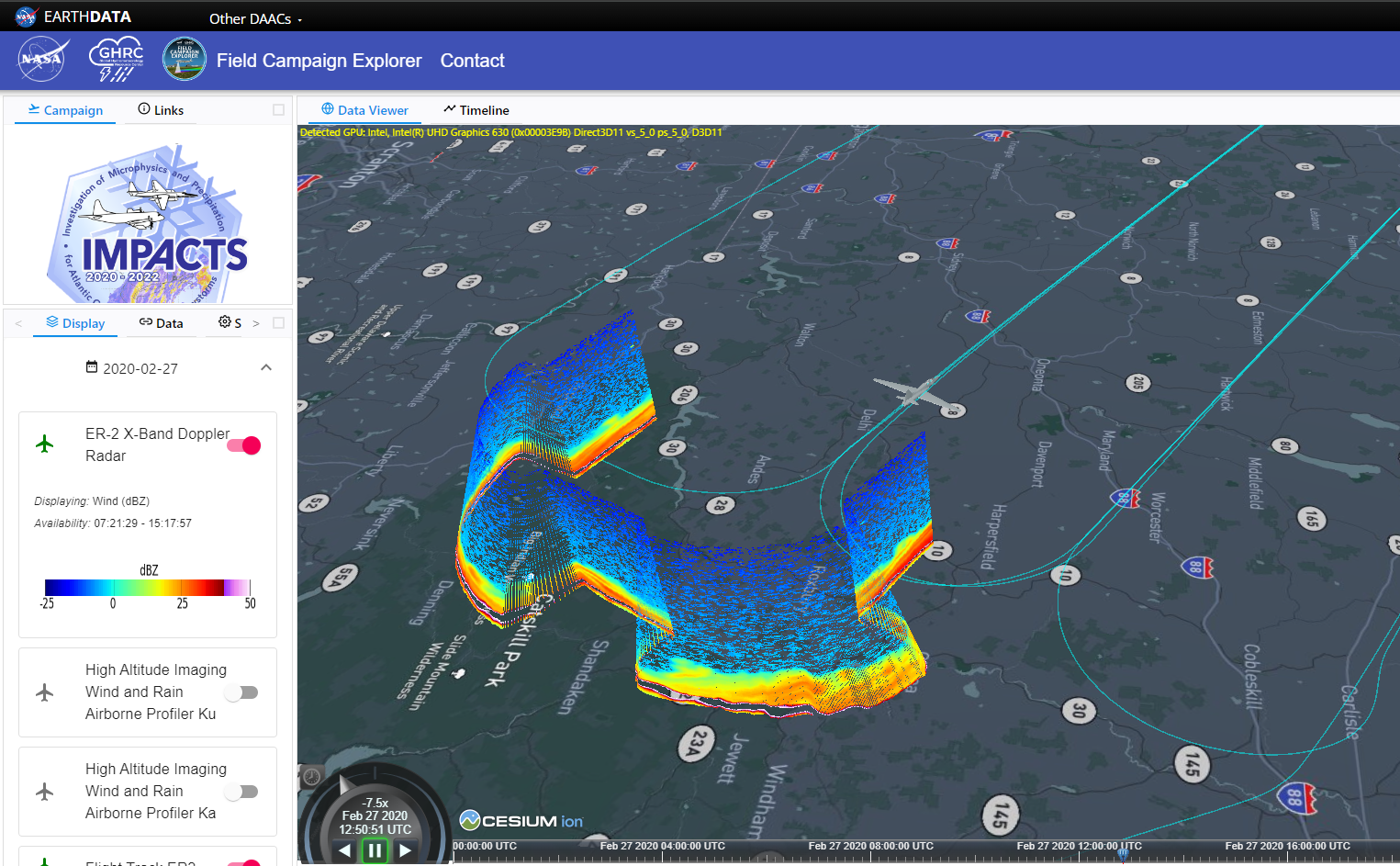
 - Indicates paper has been withdrawn from meeting
 - Indicates an Award Winner