
Handout (2.9 MB)
From academic research in the UK, new capability has been added to the UK modelling system to represent the two main types of sulphate aerosol particle that comprise the stratospheric aerosol layer (e.g. Murphy et al., 2014): so-called pure sulphuric particles (from homogeneous nucleation), and sulphate particles nucleated heterogeneously on meteoric smoke particles.
University research projects in the UK have applied the meteoric-aerosol-updated UM-UKCA system for several major volcanic cases (e.g. Dhomse et al., 2020; Marshall et al., 2019), for the background stratospheric aerosol layer (Mann et al., 2024; Yoshioka et al., 2024; Brooke et al., 2017), and comparing to recovered vertical profile measurements after 1963 Agung (Antuna Marrero et al, 2021; Li et al., 2024).
International multi-model stratospheric aerosol activities have also validated the GA4 UM-UKCA capability, for intercomparisons of Tambora (Marshall et al., 2018; Clyne et al., 2021), Pinatubo (Quaglia et al., 2023) and for background conditions (Brodowsky et al., 2024).
The modelling shows representing meteoric-sulphuric particles in the stratospheric aerosol layer reduces the size of pure sulphuric aerosol (Mann et al., 2024), even within the tropical stratospheric reservoir (TSR). Furthermore, the ISA-MIP multi-model comparisons of the background stratospheric aerosol layer (Brodowsky et al., 2024) show the UM-UKCA is unique among the models in capturing the relatively small particle size (Reff) seen in the TSR, as measured for example from SAGE-II satellite measurements.
However, the timescale required for this research, and other circumstances, with also some key recent improvements affecting high-latitudes (Yoshioka et al., 2024), has meant the new capability has not yet been incorporated into the more recent versions of the UK Unified Model modelling system used within UKESM1.1, the UK’s climate model for CMIP7.
Initial comparisons within Tonga-MIP indicate the GA4 UM-UKCA simulations predict different volcanic aerosol progression to the other models, and here we explore this issue further, comparing GA4 UM-UKCA to UKESM1.1 Hunga aerosol simulations, both models running the “first 100 days” experiment 3 within the follow-on HTHH-MOC activity (Zhu et al., 2024).
The January 2022 Hunga eruption generated the strongest stratospheric aerosol optical depth for 30 years (e.g. Khaykin et al., 2022; Taha et al., 2022; Bourassa et al., 2023), but the eruption emitted only a modest 0.4-0.5Tg of SO2 to the stratosphere (Carn et al., 2022).
The most explosive eruption in the satellite era (Wright et al., 2022), an upper portion of the Hunga plume was initially at ~35-40km altitude (Taha et al., 2022), but the main detrainment occurred lower at ~27-30km, with a highly unusual initial steep descent of the plume seeing the layer of Hunga-enhanced aerosol form at ~22-26km (e.g. Kloss et al., 2022; Legras et al., 2022; Baron et al., 2023).
The shallow underwater explosion also detrained ~150Tg of water vapour deep into the stratosphere (e.g. Millan et al., 2022), shown by Zhu et al. (2022) and Asher et al. (2023) to have accelerated SO2 oxidation and enhanced the growth of volcanic sulphate aerosol to optically-active sizes.
A key research question relates to whether the submarine setting, and associated high water vapour within the eruptive plume, may have (unusually) caused relatively large sulphate particles to have formed already, within the eruptive plume, and we explore this in sensitivity simulations which include a “primary sulphate” emission, i.e. where oxidation and particle formation occurred at the sub-grid scale.
The analysis from Zhu et al. (2022) identifies the coagulation sink as a key process within the growth, and we explore the implications of the two sulphate aerosol types in separate modes in the aerosol microphysics module, including with their microphysical interactions (coagulation and uptake of sulphuric acid).
In comparing the UM-UKCA and UKESM1.1 Hunga aerosol simulations, within the same modelling system (identical chemistry, aerosol processes, and other parameterizations) we seek to identify how the differing background affects the growth, analysing aerosol extinction “colour ratios”, for example across the 449nm, 756nm and 1021nm SAGE-III-ISS channels analysed in Wrana et al. (2021) and Knepp et al. (2024).
The UM-UKCA and UKESM1.1 Hunga aerosol experiments follow protocols for the Tonga-MIP multi-model experiment (Clyne et al., 2024), and indicate more generally how moderate volcanic enhancements to the stratospheric aerosol layer evolve in the transitional post-plume phase (months 2 to 4 after the eruption).
More generally, we seek to understand the different 3-lambda relationships that derive Reff and sulphate mass from multiple-wavelength aerosol extinction.
References
Antuna-Marrero et al. (2021), Earth System Science Data, https://doi.org/10.5194/essd-13-4407-2021 .
Asher et al. (2023): Proc. Nat. Acad. Sci, https://doi.org/10.1073/pnas.2219547120
Baron et al. (2023), Geophys. Res. Lett., https://doi.org/10.1029/2022GL101751
Bourassa et al. (2023): Geophys. Res. Lett., https://doi.org/10.1029/2022GL101978 .
Brodowsky et al. (2024), Atmos. Chem. Phys., https://doi.org/10.5194/egusphere-2023-1655 .
Brooke et al. (2017), J. Geophys. Res., https://doi.org/10.1002/2017JD027143 .
Carn et al.. (2022), Frontiers in Earth Science, https://doi.org/10.3389/feart.2022.976962
Clyne et al. (2021), Atmos. Chem. Phys.,, https://doi.org/10.5194/acp-21-3317-2021
Clyne et al. (2024), in prep. for submission to J. Geophys. Res..
Dhomse et al. (2020), Atmos. Chem. Phys, https://doi.org/10.5194/acp-20-13627-2020
Khaykin et al. (2022), Comms Earth & Env., https://doi.org/10.1038/s43247-022-00652-x
Kloss et al. (2022): Geophys. Res. Lett., https://doi.org/10.1029/2022GL099394
Knepp et al. (2024): Atmos. Meas. Tech., https://doi.org/10.5194/amt-17-2025-2024 .
Legras et al. (2022): Atmos. Chem. Phys., https://doi.org/10.5194/acp-22-14957-2022
Li et al. (2024): in prep. for submission to Atmos. Chem. Phys.
Mann et al. (2024): in preparation for submission to Atmos. Chem. Phys.
Marshall et al. (2018), Atmos. Chem. Phys., https://doi.org/10.5194/acp-18-2307-2018
Marshall et al. (2019), J. Geophys. Res., https://doi.org/10.1029/2018JD028675
Millan et al. (2022), Geophys. Res. Lett. https://doi.org/10.1029/2022GL099381 .
Murphy et al. (2014), Q. J. R. Meteorol. Soc., https://doi.org/10.1002/qj.2213
Quaglia et al. (2023), Atmos. Chem. Phys., https://doi.org/10.5194/acp-23-921-2023 .
Taha, et al. (2022), Geophys. Res. Lett., https://doi.org/10.1029/2022GL100091 .
Wrana et al. (2021): Atmos. Meas. Tech., https://doi.org/10.5194/amt-14-2345-2021
Wright et al. (2022), Nature, https://doi.org/10.1038/s41586-022-05012-5
Yoshioka, et al.: in prep. for submission to Atmos. Chem. Phys.
Zhu et al. (2022), Comms. Earth and Env., https://doi.org/10.1038/s43247-022-00580-w
Zhu, et al. (2024), in prep. for submission to Geosci. Mod. Dev.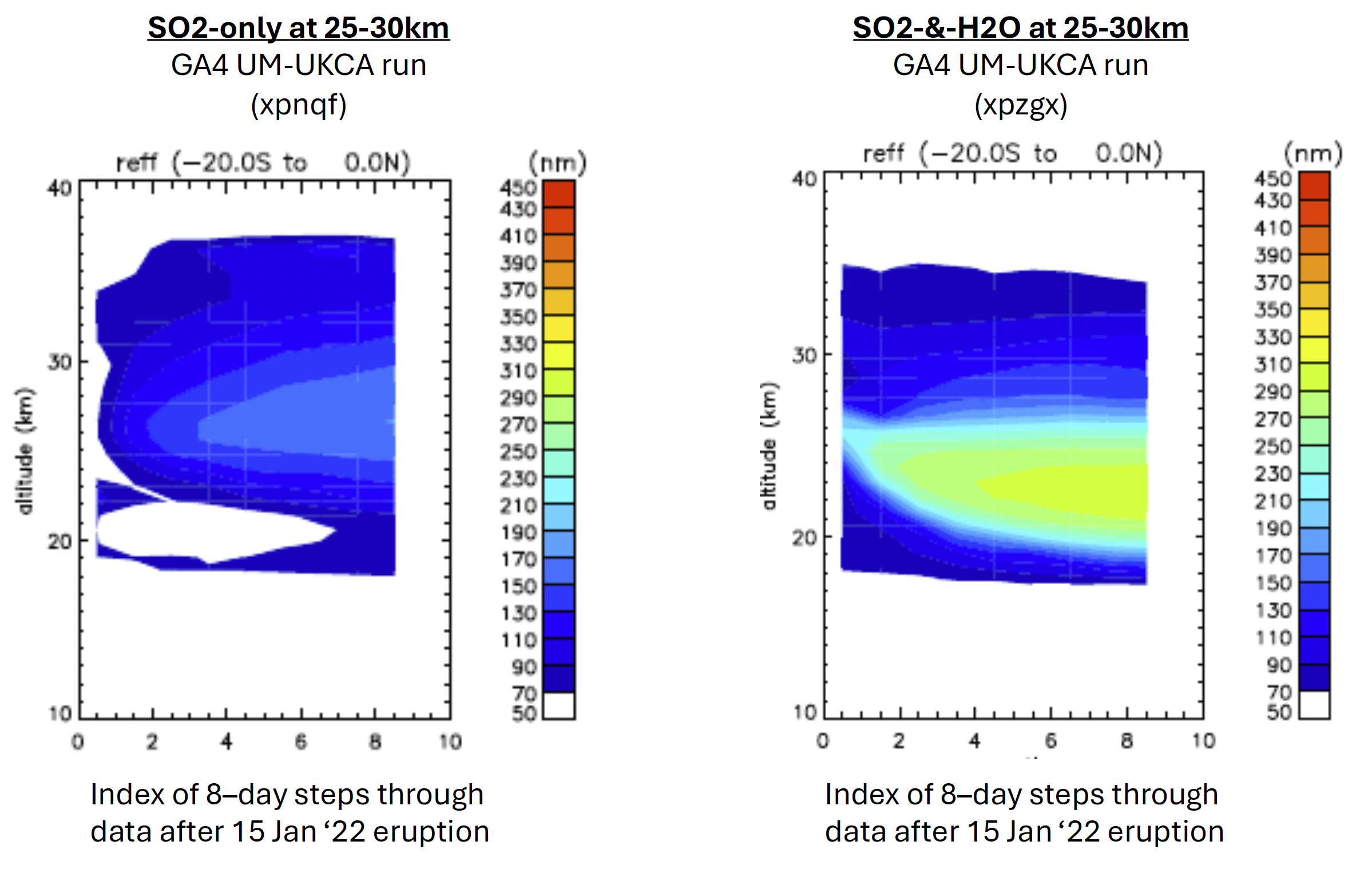
 - Indicates paper has been withdrawn from meeting
 - Indicates an Award Winner