
Abstract
Ever since fracking technology, drilling downward and then horizontally, has been developed to extract oil and gas from underground bedrock, the number of fracking wells has been drilled at an accelerating speed, and the amount of underground water consumed has also increased enormously. The goal of this paper is to address this alarming environmental and climate threat from the proliferation of fracking wells accompanied by a surge in groundwater consumption, through analyzing the up-to-date registry data available as of October 2023 from FracFocus.org on the fracking wells nationwide[1]. The paper starts with a literature review to study the existing research findings on fracking water consumption issues. Next it provides a comprehensive data analysis of the water consumption by fracking wells at both national and state levels. It also explores the relationships between the water consumption with various other factors such as the vertical depth of the wells, the chemical ingredients of the fracking fluid, and the purposes of the additives, and aims to provide insights from the correlation and causality analyses that may offer potential strategies to reduce groundwater consumption in the fracking industry. In addition, the paper employs machine learning techniques such as Random Forest model to explore using predictive models to identify wells that have high likelihood of causing a water contamination issue so that proactive controls can be developed to reduce the occurrence of water quality issues.
Methods
First, a comprehensive literature review was conducted. Research papers from academic journals such as Environmental Science & Technology, articles from government agencies such as the United States Environmental Protection Agency (EPA), and publications from the environmental science departments in colleges were reviewed and examined. Keyword search methods were employed to identify research papers and websites with relevant information on fracking. Data from government agencies, industry reports, academic research, and non-governmental organizations (NGOs) were collected and sorted into categories for analyses. After selecting the most relevant resources, a comprehensive and in-depth literature review was conducted to study research papers, articles, and data pertaining specifically to the effects of fracking on groundwater consumption and contamination, along with its environmental implications.
Next, historical national hydraulic fracturing chemical disclosure data were downloaded from the FracFocus Chemical Disclosure Registry via https://fracfocus.org/data-download.[1] FracFocus offers hydraulic fracturing companies’ disclosure data to the public free of charge and updates the information on a daily basis. The downloaded data were imported into a Python environment for further analysis. we performed manual corrections prior to data analysis. Statistical analysis, including distribution analysis, correlation analysis, regression analysis, and boxplot, were employed to examine water consumption in wells and to investigate the factors influencing the total water consumed by a well.
Thirdly, Natural language Processing (NLP) and Machine Learning techniques, such as Cluster Analysis, were employed to extract and analyze the data as needed. Additionally, Machine learning techniques, such as Logistic Regressions and Random Forest models, were used to learn from the reported water contamination cases and to build models that could potentially predict future violations of water quality.
Results and Discussions
A. Results from Literature Review
Firstly, the presence of drilling wells was linked to higher concentrations of methane in drinking wells near the natural-gas wells. In addition, several harmful compounds have been detected in wells near fracking sites in the Barnett Shale region of Texas, a region known for high fracking activity. Lastly, the process of fracking consumes a large amount of water and the EPA has raised concerns over water withdrawal in areas with limited or declining groundwater resources.
B. Results from Data Analysis and Statistical Analysis
Python code was used to analyze the historical national hydraulic fracturing chemical disclosure data from the FracFocus Chemical Disclosure Registry. The objective of this analysis was to examine the relationships between the total base water consumed by a well with other available data elements, such as the total vertical depth, purposes for the additives used, and ingredients used in the job and additives. Given the scarcity of water resources in many regions, the significant use of large quantities of water for hydraulic fracturing in some areas can severely impact drinking water availability and even cause drought near fracking wells. Understanding the factors that contribute to surging groundwater consumption in fracking wells can help develop potential strategies to reduce water usage in these operations. Texas accounts for approximately half of total fracking wells, followed by Colorado, Oklahoma, North Dakota, New Mexico, and Pennsylvania. A state-by-state comparison of Total Base Water Volume reveals significant variations, Louisiana exhibits the highest median Total Base Water Volume, exceeding 15 million gallons per well.
C. Results from Natural Language Processing and Machine Learning
There is a positive correlation between the vertical depth of the well and the base water volume consumed; deeper wells tend to consume more base water. Additionally, positive correlations with base water consumption are observed for ingredients such as acid, alcohol, ethoxylated, silica, petroleum, and crystalline. Conversely, negative correlations are found between base water consumption and factors such as Percent High Additive, Sodium, salt, quartz, glycol and methanol.
Conclusions
In conclusion, while hydraulic fracturing (fracking) has brought substantial economic benefits to the United States by providing abundant energy for both industrial and personal consumptions, it has concurrently posed significant environmental and climate threats. These threats arise primarily from excessive and surging water consumption and water contamination due to the chemical ingredients used in fracking fluids. This research, utilizing up-to-date data on fracking wells nationwide, aims to provide valuable insights into water consumption and its correlating factors in fracking operations. Our goal is to enhance the predictive model for identifying potential problem wells, thereby empowering regulators and policymakers to take proactive actions. To protect our vital underground water resources and the natural environment, it is crucial to advocate for the responsible use of water resources and to explore alternative and sustainable energy resources.
[1] Frac Focus Chemical Disclosure Registry. The national hydraulic fracturing chemical disclosure registry. https://fracfocus.org/data-download. (Last modified October 12, 2023).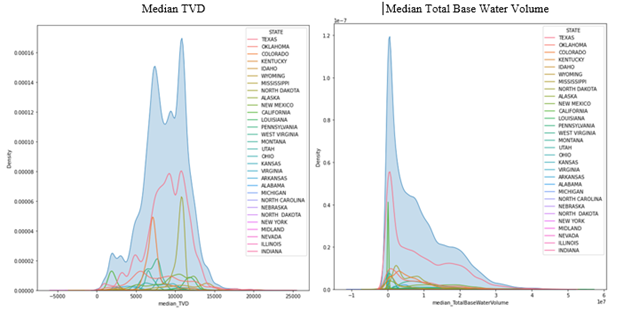
 - Indicates paper has been withdrawn from meeting
 - Indicates an Award Winner