
This study uses publicly available data from the Integrated Postsecondary Education Data System (IPEDS) to specifically examine trends in meteorology/atmospheric science degrees across all post-high school levels issued since 1997 in comparison to geoscience more broadly. Nationwide, the number of Bachelor’s (~700 per year) and Master’s (~250 per year) degrees awarded each year has remained fairly constant since 2006 but the number of programs awarding Bachelor degrees has increased from near 50 to over 70 in that same period. The percentage of degrees awarded to students identifying as female is consistent across Bachelor, Master, and PhD levels and has increased from approximately 25 % in 1997 to 40 % in 2022, but these numbers vary substantially across institutions with only 8 programs exceeding 50 % of degrees awarded to female students. Following the practice of AGI and defining historically Under-represented/Under-served (HUR/US) students as: Hispanic or Latino, American Indian or Alaska Native, non-Hispanic, Black or African American, non-Hispanic, and Native Hawaiian or Pacific Islander we also examine the small numbers but increasing trends in degrees awarded to students with some of those identities, especially at the associate degree level. Data will be updated to included 2023 should it be available prior to the presentation.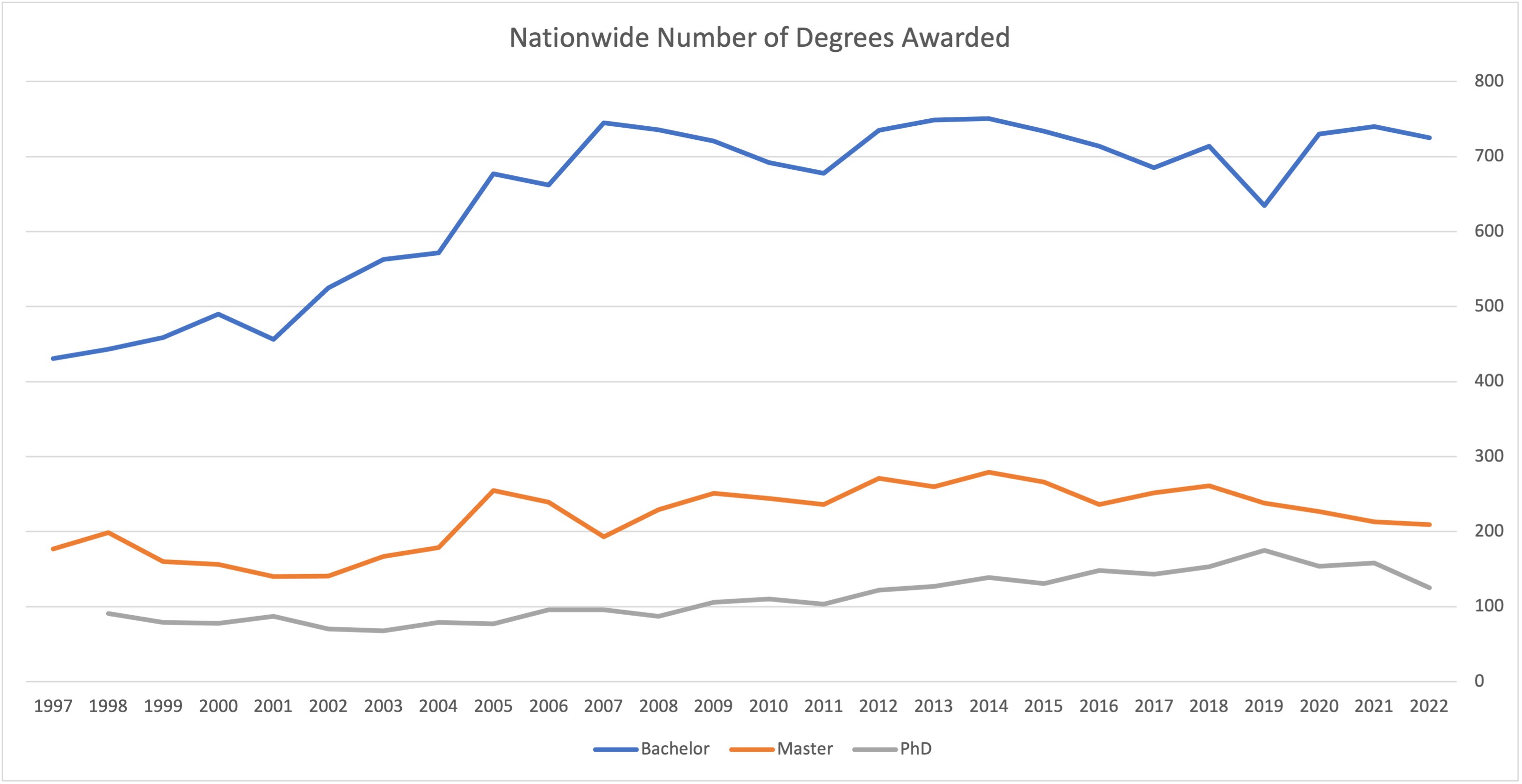
Supplementary URL: https://clim-var-change.pres2ip.com/nationwide-atmospheric-science-and-meteorology-degree-analysis/
 - Indicates paper has been withdrawn from meeting
 - Indicates an Award Winner