Wednesday, 15 January 2025: 11:45 AM
354 (New Orleans Ernest N. Morial Convention Center)
Gustavo Britto Hupsel de Azevedo, Oklahoma State University - College of Engineering, Oklahoma City, OK; and A. Avery, B. Doyle, B. Filipiak, R. Zubair Zahoor Qadiri, D. B. Wolff, D. Cerrai, C. N. Helms, A. Tokay, A. Loftus, J. Jacob, and D. Schvartzman
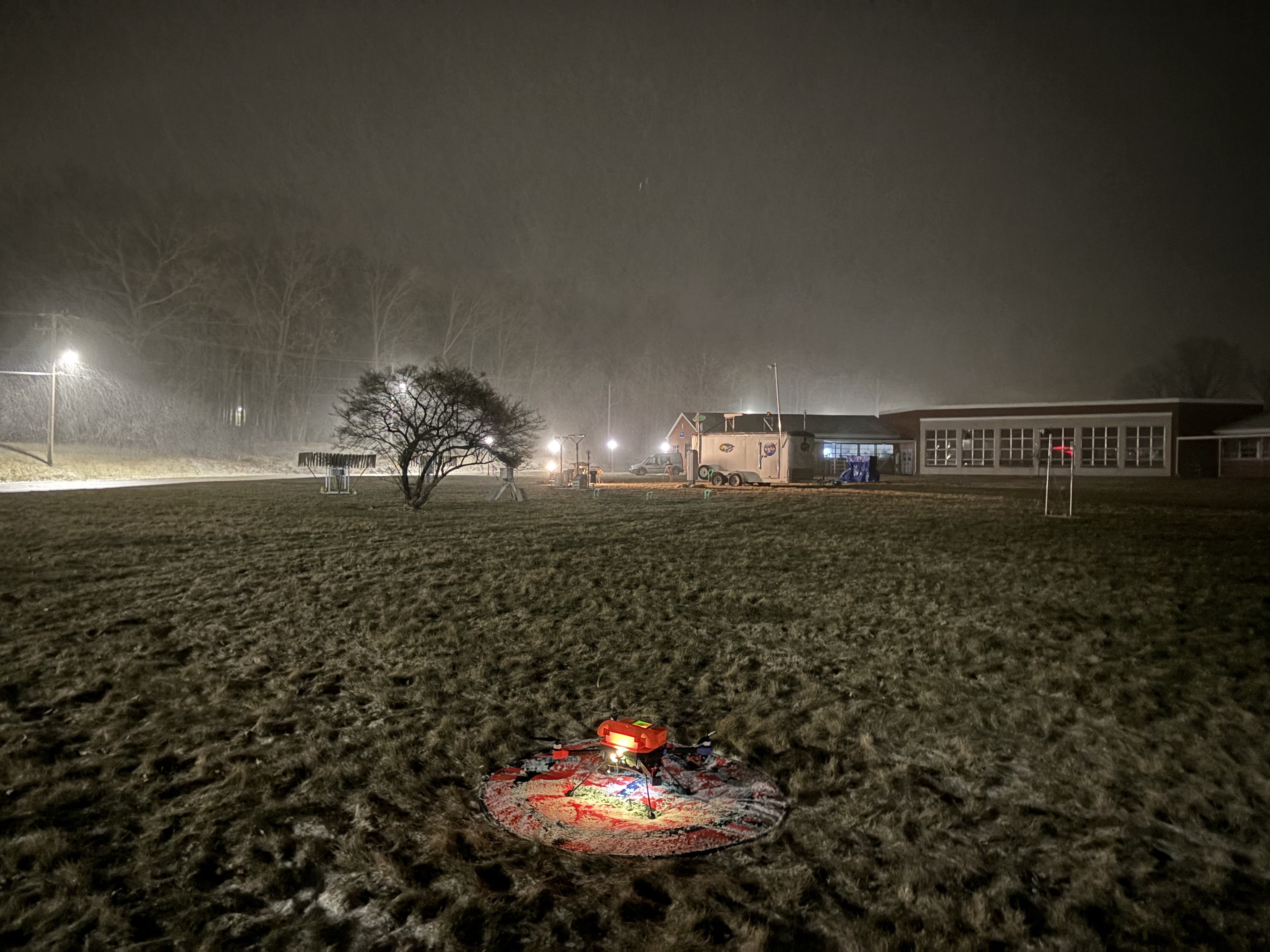
Since 2022, the Oklahoma State University and the University of Oklahoma’s Advanced Radar Research Center teams have been developing an Unmanned Aerial Weather Measurement System (WxUAS) for sampling low-altitude wintry precipitation environments. The proposed WxUAS provides in-situ samples of pressure, temperature, relative humidity, and particle size count, and remote samples of reflectivity and Doppler velocity from an onboard, vertically pointing millimeter wave (mmWave) radar. Developmental milestones for this endeavor have been shared with the community at the 2023 and 2024 AMS annual meetings. In 2025, we will present the proposed system's measurements and results obtained during the NASA Global Precipitation Measurements (GPM) Mission's Multi Atmospheric Instrument Intercomparison Study (MAI2S).
MAI2S was a wintry precipitation study organized by Oklahoma State University, the University of Oklahoma, the University of Connecticut, and the NASA GPM ground validation program. It leveraged the ground-based instruments and location from the 2021-2023 IMPACTS field campaign in a study comparing redundant Micro-rain radars, Pluvio weighing bucket gauges, PARSIVEL disdrometers, and Precipitation Imaging Packages (PIPs), amongst other instruments supported by the NASA GPM Atmospheric Instrumentation Laboratory (GAIL). During MAI2S, our WxUAS performed 46 atmospheric profiles in drizzle, rain, and snow, producing valuable insight into low-altitude wintry precipitation events, some of which were not detected by the weather service's current observation systems. Additionally, our profiles produced novel observations of the low-altitude cloud transition environment. This presentation will highlight these and other results from the WxUAS profiles above the ground-based instruments during two storms in the late winter and early spring of 2024.

- Indicates paper has been withdrawn from meeting

- Indicates an Award Winner
