
We report procedures and insights from two California community-based research studies that increase the coverage of low-cost sensors in frontline communities. Between 2021-2024, Study 1 has deployed low-cost monitors in 345 homes across four low-income urban communities in the San Francisco Bay Area, California (Fig. 1a). Starting in 2024 and continuing through 2026, Study 2 has deployed five low-cost monitors on the Tule River Reservation, a low-income rural community and home to the Tule River Indian Tribe in the remote western foothills of the Sierra Nevada (Fig. 1b).
Both communities have struggled with poor air quality due to wildfire smoke. Participants in Study 1 remembered September 2020’s “Orange Skies Day,” which capped off weeks of dangerous air quality due to multiple nearby lightning complex wildfires. For Study 2, the Reservation adjoins Sequoia National Forest, where fire management decisions by the U.S. Forest Service can negatively impact the Tribe’s safety, environmental resources, and cultural sites, most recently during 2021’s devastating Windy Fire. This wildfire smoke exposure is above the unhealthy air quality that routinely affects the Tribe due to its location in the Central Valley. Both studies are increasing the coverage of low-cost sensors for populations where representation in publicly available data is limited, and the differences we observe when focusing data collection on frontline communities informs our understanding of data as a fundamental tool for environmental justice in policy and improved emergency management.
Preliminary assessment of data from Study 1 suggests the intrusion of wildfire smoke is worse in participants’ homes than in nearby homes in more affluent areas of the San Francisco Bay Area. Importantly, these nearby homes are the same ones who have contributed the most publicly available data to the low-cost sensor network in the past, demonstrating the overlooked nature of frontline communities in this data. In Study 2, which focused on air quality monitoring in indoor public spaces as well as outdoors, Tribal staff determined the best sites for locating low-cost sensors and sought local approvals and support for these placements. Staff were trained over video conference to install sensors and maintain connectivity for data transmission. These processes ensure the Tribe can reliably use the data collected from their low-cost sensors in wildfire smoke season.
Paired with these efforts to deploy low-cost sensors across both studies, our team has collected rich social science data from surveys, interviews, and focus groups with community members. This social science data has provided unique insight to what community members know and understand about air quality and wildfire smoke. Data includes past experiences with wildfire smoke, perceptions of wildfire smoke risk, and strategies for managing or decreasing exposure to wildfire smoke. In Study 1, most participants are Spanish-speaking, and the lack of familiarity with the air quality index (AQI) among both English- and Spanish-speaking participants suggests improved opportunities for emergency management and communication among this subgroup. In Study 2, our interview study of health practitioners and emergency managers identified clean air centers as promising spaces for wildfire smoke events. However, public uptake of clean air centers remains lower than hoped for, and participants identified a need for outreach to and transportation for Elders living on the Reservation to support community health. As exemplified in both studies, air quality data is insufficient for bridging this gap from information to widespread action. Additionally, this data informs the emergency management strategies our community partners rank as most promising. For example, in Study 1, air cleaners were rigorously tested for deployment as a study arm. The positive response from study participants receiving air cleaners further prompted our community partners to pursue fundraising to develop additional programming to deliver more air cleaners to community members not enrolled in the study.
In both studies, the value of low-cost sensors for frontline communities is increased by this improved understanding of how individuals, households, and communities make decisions during wildfire smoke conditions. We wish to share with colleagues at the FireWx1 Conference more about the cross-sector partnerships, procedures, and insights from our work. We believe this shared knowledge will support more emergency managers, researchers, and community leaders in creating cultures of air quality monitoring to improve health and well-being in areas already affected by wildfire smoke.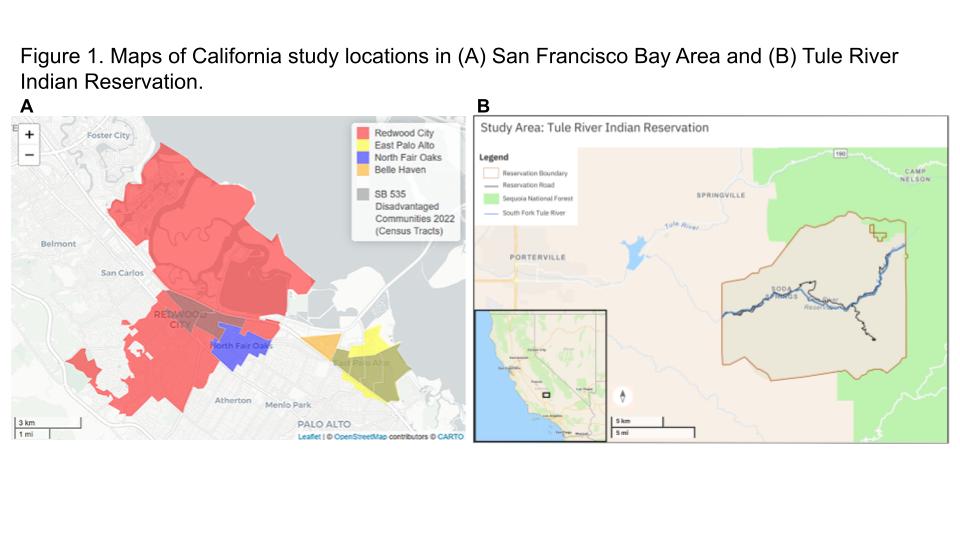
 - Indicates paper has been withdrawn from meeting
 - Indicates an Award Winner