
To fill this gap, this study examines fire-modified winds in the presence of large fire heat fluxes from the combustion of buildings and vegetation. This is accomplished using a coupled fire-atmosphere model (WRF-Fire) run in large-eddy simulation mode (100 m horizontal grid cell spacing). Fire-generated winds are quantified using differences between two simulation groups: (1) a fireless control run, and (2) a “forced fire” run with prescribed fire spread (i.e., time of ignition) and modified fuel loads. The time-of-ignition of model grid points is based on previously simulated fire spread from SWUIFT. This step bypasses uncertainties in the fire spread and allows us to isolate the atmospheric response to the fire. Since existing fuel categories in WRF-Fire consider urban structures as unburnable, we create a new housing/structure fuel category to account for structures being the dominant fuel type during the fire. These urban fuels have very high spatially averaged fuel loads (~20-40 kg m-2) and thus are capable of producing large heat fluxes that perturb the atmospheric flow.
By contrasting the control and forced-fire simulations, our results help isolate the role that urban burning may have played in the meteorology contributing to one of Hawaii’s most devastating tragedies. These results also inform our understanding of other WUI fires where houses/structures become a dominant fuel type, such as California’s Camp fire and Colorado’s Marshall Fire.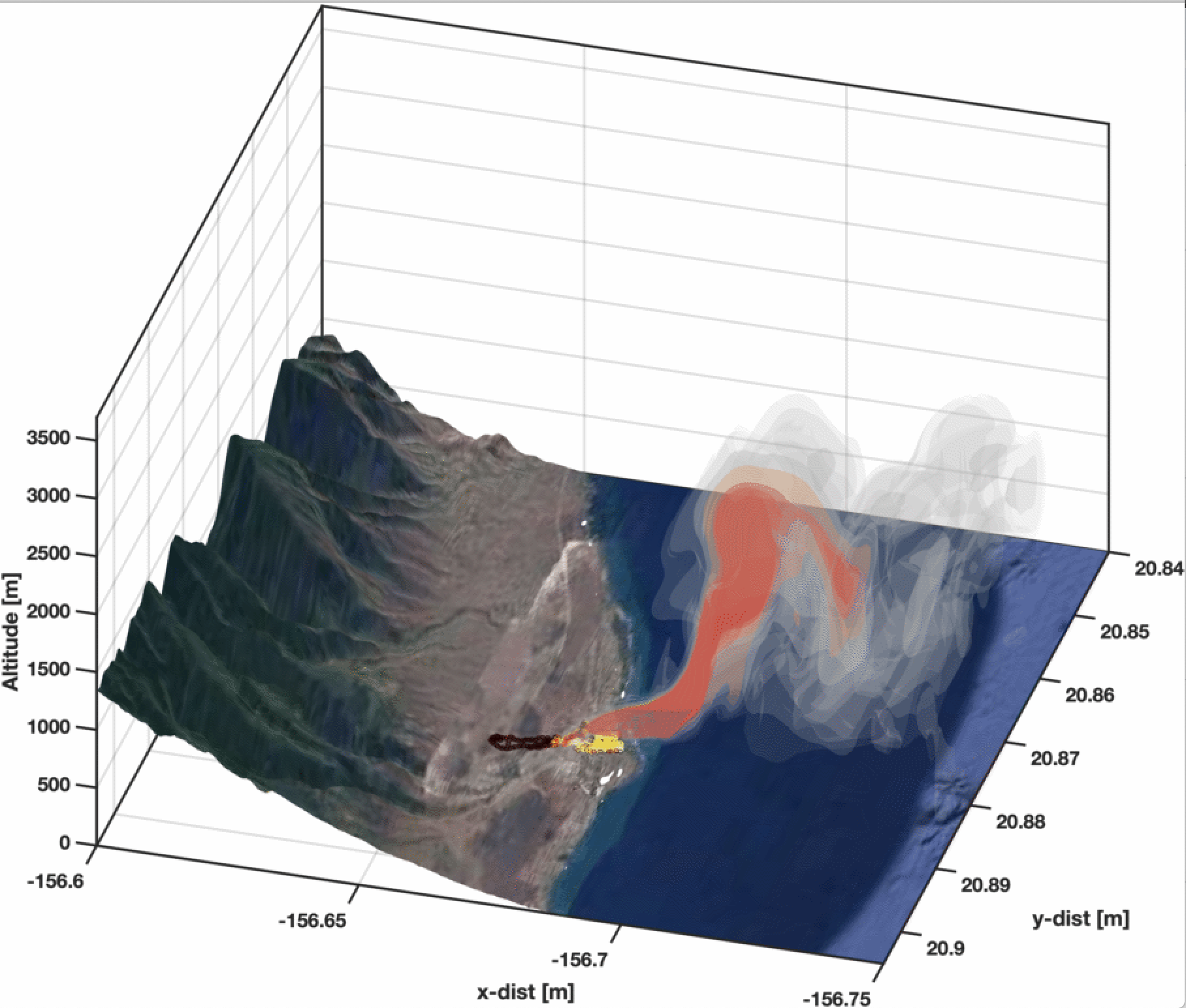
 - Indicates paper has been withdrawn from meeting
 - Indicates an Award Winner