
Sunday, 12 January 2025
Hall C (New Orleans Ernest N. Morial Convention Center)
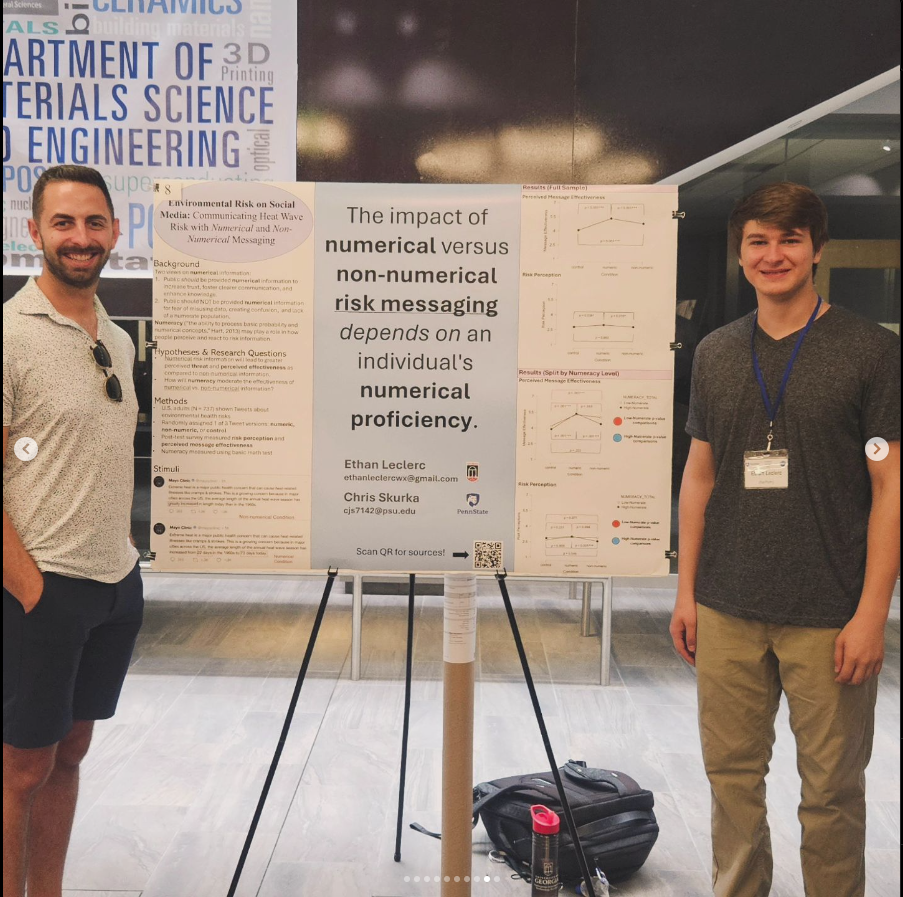
Climate change is one of the most important global problems our society faces today. It will have wide-reaching impacts on the economy, agriculture, weather patterns, and ecosystems. The most weather-related deaths occur due to heatwaves. Heat waves worsen wildfires, put a strain on hospital systems, and contribute to droughts that impact public human health. This study aims to explore how to best communicate these risks to the public — especially considering that the public varies in their ability to process numerical risk (“numeracy”). Previous research has shown that the public may react differently to numerical vs. non-numerical information depending on whether they are more or less numerate. This paper presents the results from a survey experiment in which we randomly assigned N = 719 U.S. adults to view one of three social media posts: numerical risk information about heat waves, non-numerical risk information about heat waves, or a control message about an unrelated topic. The results suggest that low-numeracy individuals displayed no preference for numerical or non-numerical information, yet high-numeracy individuals showed a significant preference for the numerical information. These results demonstrate that the impact of numerical versus non-numerical risk messaging indeed depends on an individual’s numerical proficiency.
 - Indicates paper has been withdrawn from meeting
 - Indicates an Award Winner