
Monday, 13 January 2025: 8:45 AM
219 (New Orleans Ernest N. Morial Convention Center)
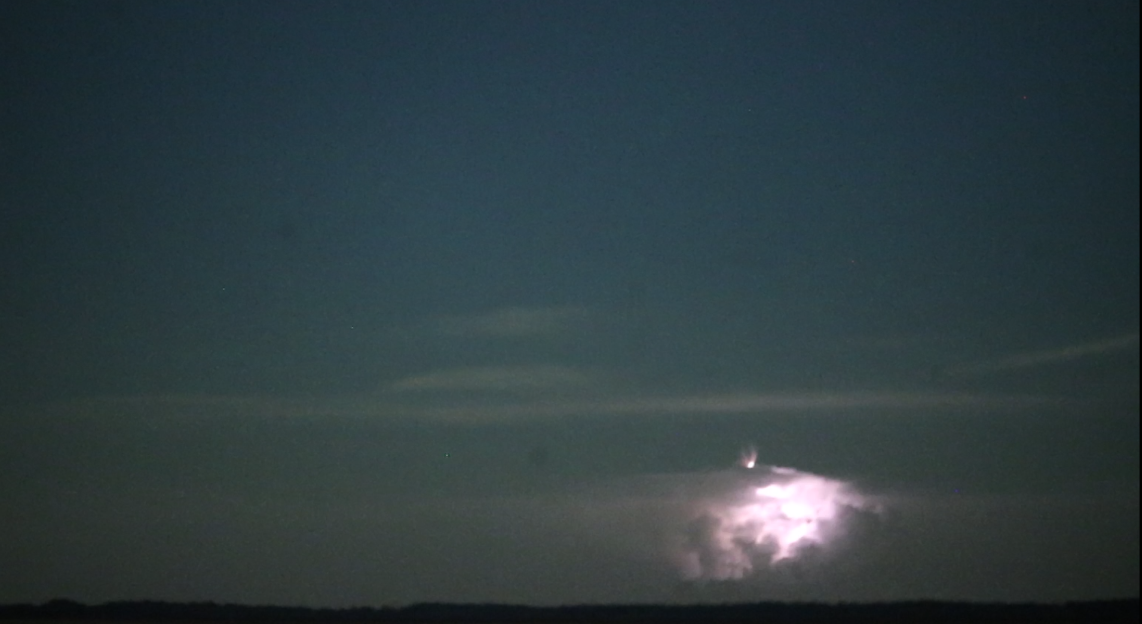
Cloud top discharges (CTDs) and their parent storms that produce them continue to be a poorly understood, yet captivating phenomenon of nature. Observed CTDs, a subset of Transient Luminous Events (TLEs), consist of pixies, gnomes, starters, blue jets, and gigantic jets, which extend upward above the cloud top by ~100 m, 1-2 km, 5-15 km, 20-30 km, and 50-70 km, respectively. Compared to other TLEs, very little is known about their morphology, composition, and formation mechanisms. This study consists of several cases of CTDs over Southeast Texas within the confines of the Houston Lightning Mapping Array (HLMA). The HLMA is comprised of a network of sensors which detect very high frequency (VHF) electromagnetic sources emanating from electrified deep convection. Information about the three-dimensional charge structure and its evolution over time is analyzed to understand its relationship with CTD characteristics. In addition to the HLMA, dual-polarization NEXRAD products such as reflectivity, specific phase and differential reflectivity, echo top height, radial divergence, and correlation coefficient, and atmospheric sounding data will provide additional meteorological information about the charge structures of the parent storms and storm top properties (turbulent mixing and divergence) critical for understanding CTD formation. A special focus will be on electrified deep convection within tropical cyclones such as Hurricanes Beryl (2024) and Nicholas (2021).
Supplementary URL: https://lightning.geos.tamu.edu/hlma/
 - Indicates paper has been withdrawn from meeting
 - Indicates an Award Winner