
We show that the multidecadal drought happened mainly due to decreased CWV over the Sahel (up to 97% contribution). This long-term decrease in CWV is likely due to a combination of decreased moisture supply from surrounding oceans, and reduced evaporation over the region. Net radiation contributed minimally in most simulations to the drought, which suggests aerosols indirectly affected Sahel rainfall. This is consistent with previous research that elucidates the indirect effect of aerosols on Sahel rainfall through its influence on AMO. Similarly, Sea Surface Temperature changes affect Sahel rainfall through their influence on CWV and lapse rate.
The following recovery was due to both increased net radiation (17-48% contribution) and CWV (51-83% contribution). The net radiation increased due to a decrease in OLR, which suggests possible feedback with moisture. GHG forcingis also a major contributor to the increase in moisture. A consistently decreasing lapse rate from the 1990s partially offset the recovery because it affected upper tropospheric MSE and, thus, vertical stability. According to our diagnostic framework, future increases in Sahel summer rainfall are possible if moisture continues to increase over the Sahel and dominates the rainfall-reducing effect of the decreasing lapse rate.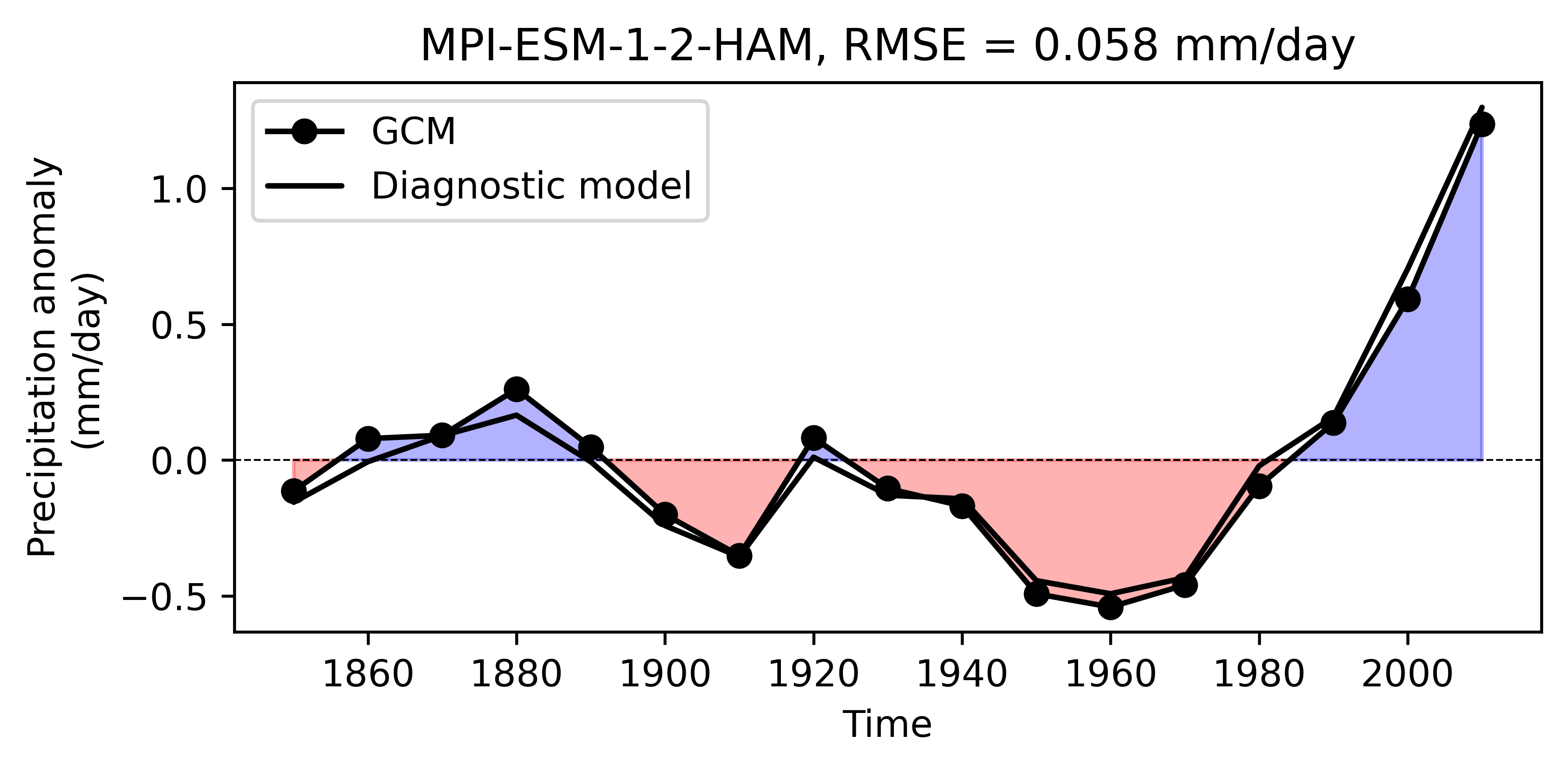
 - Indicates paper has been withdrawn from meeting
 - Indicates an Award Winner