
Monday, 13 January 2025: 4:45 PM
218 (New Orleans Ernest N. Morial Convention Center)
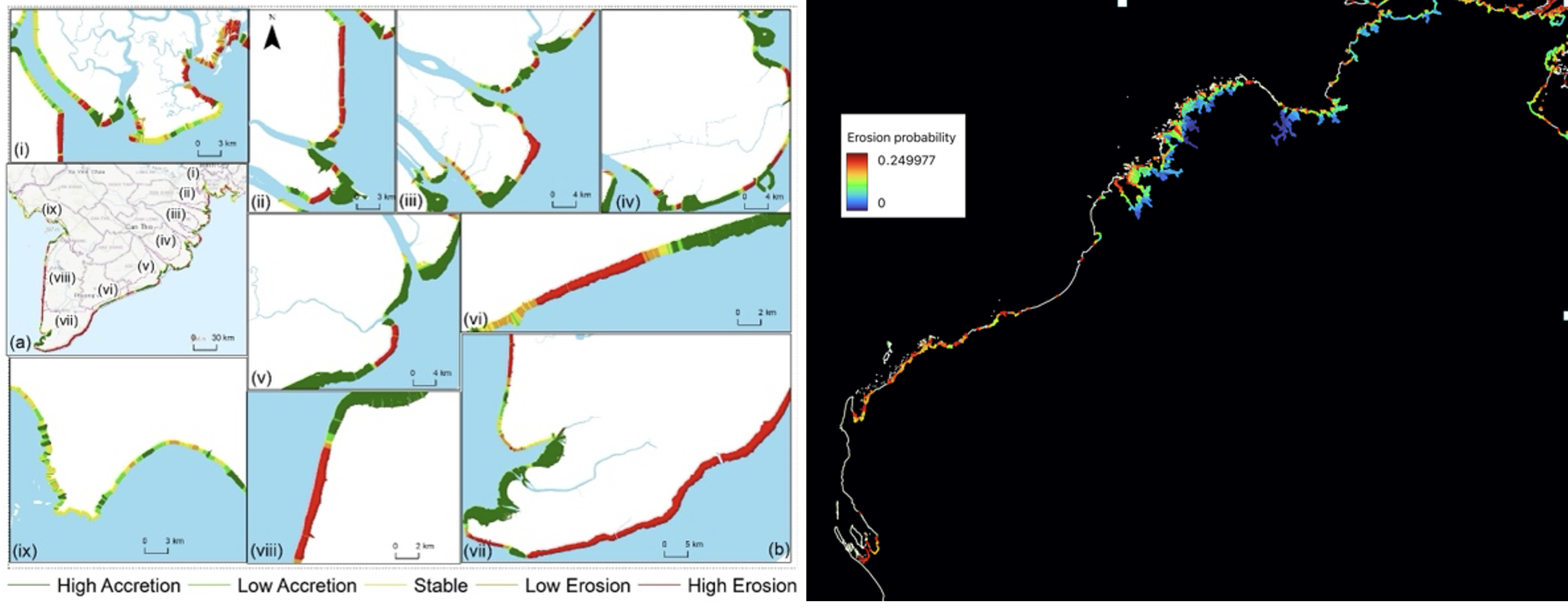
The global population in the low elevated coastal zone will exceed one billion by 2050. These regions are also subject to intensive agriculture and urbanisation. Thus, the impact of accelerating sea level rise and other changing geographical forcings on coastlines worldwide is of major societal concern. Changes to coastlines are not just a coastal erosion or flooding concern; seawater intrusion into coastal groundwater aquifers, biodiversity loss and impacts on human health are examples of the connection between coastal dynamics and broader Earth systems. I will present our latest computational and field research on what is currently happening to Australia and Viet Nam’s living coasts (left) and what we might expect into the future (right). Our results demonstrate a role for coastal vegetation (such as mangroves and saltmarshes) in stabilising shorelines, but sea level rise response thresholds and macroclimatic and geomorphic forcings present tipping points that will impact both the future distribution of mangroves in these regions and the shape of the coastline. An ensemble of deep learning algorithms applied to 1,800,000 shoreline change observations in Australia and 6,639 in southern Viet Nam, identified that while well understood oceanographic and meteorological forcings are still the main drivers of coastal change, sea level rise is an emerging threat, especially along some coastlines.
 - Indicates paper has been withdrawn from meeting
 - Indicates an Award Winner