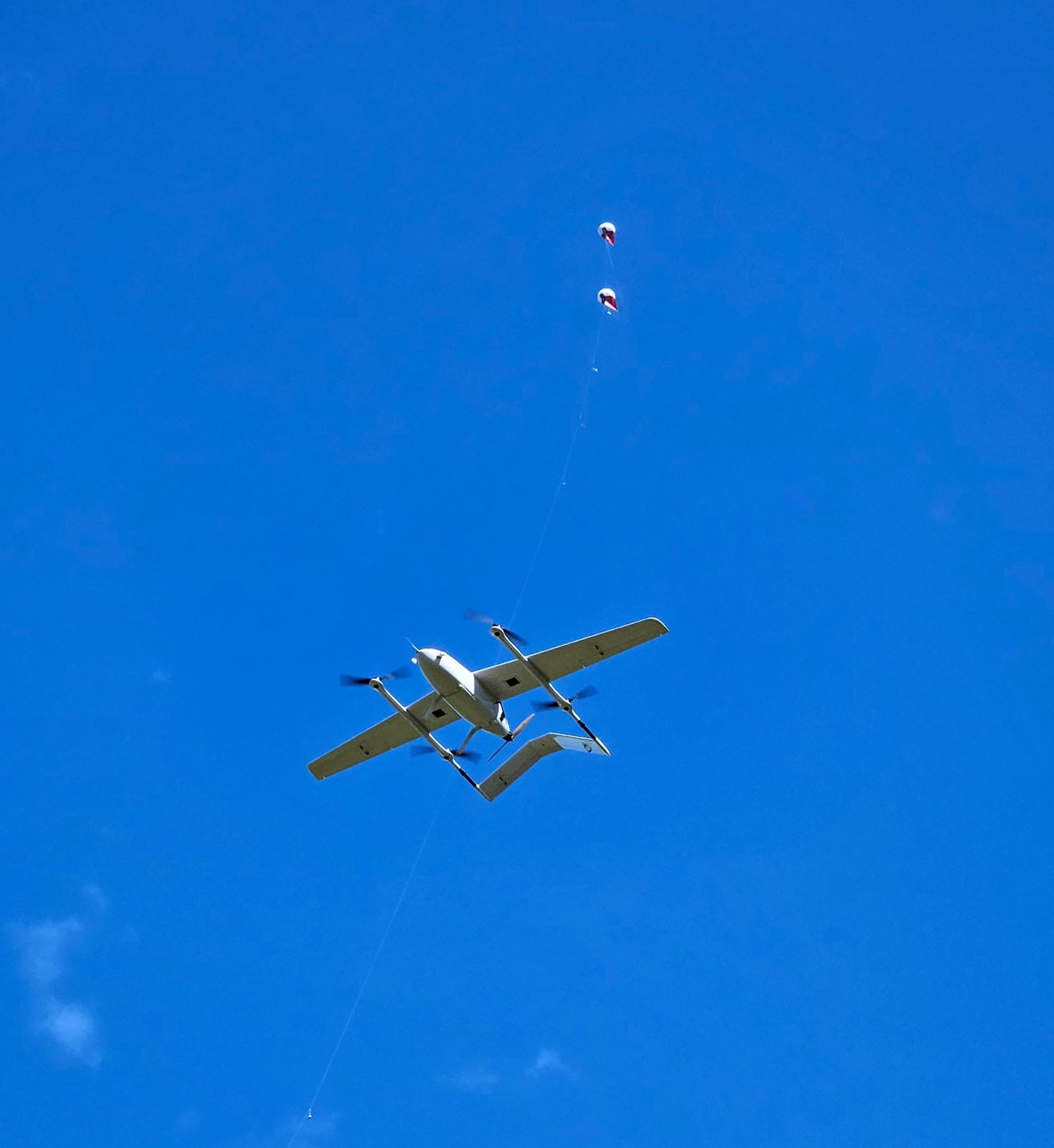
IClouds, and particularly the cloud-aerosol-turbulence interactions, are one of the major uncertainties in climate projections and also in numerical weather prediction. To fully understand the physical mechanisms, simultaneous in-situ measurements of turbulence, cloud microphysics and aerosols are required. We carried out a comprehensive field investigation at FMI PAL-SOD by (i) deploying the Max Planck CloudKite (MPCK), a tethered balloon-kite hybrid instrument with cloud microphysics, turbulence and aerosol sensors, (ii) deploying 11 WinDarts attached to the MPCK tether to simultaneously profile the thermodynamic state and aerosol concentrations within the Atmospheric Boundary Layer (ABL), (iii) Tracking small neutrally buoyant GPS-enabled and instrumented balloon tracers (SMARTIES: SMART Integrated Electronic Sensors ) to study the local ABL, (iv) tracking small non-spherical particles in the ABL (SkyTrace sensors), and (v) atmospheric profiling using Unmanned Aerial Vehicles (UAVs). We report the instrumentation used and the utility of the MPCK. We used for the first time two 250m^3 tethered helikites and flew the instruments at up to 1.4km AGL. With the WinDarts, the aerosol spectrometers and the instrumented UAVs for
Aerosol-Cloud Interactions (ACI) we investigated
the life cycle of aerosols in the ABL and clouds, while simultaneously measuring aerosol, cloud microphysics and turbulence. ACI is one of the major hurdles to be overcome in reducing climate uncertainties.
Furthermore, while large-scale transport is well understood and measured by observing stations and satellite observations, our knowledge of smaller "local scales", i.e. scales from 100 m to 50 km, is limited. In IMPACT, we investigated local scales by tracking SMARTIES (20 at a time) in the designated airspace at FMI PAL-SOD. We gathered not only transport properties within the spectral gap of the atmosphere but also radio sond like information.
In a third line of experiments, we investigated the dynamics of non-spherical falling particles in the ABL. So far, operational models assume that the dispersion range and residence time of particles in the ABL depend almost entirely on the so-called particle terminal velocity. However, it is known that non-spherical particles, depending on their size and density, undergo orientation instabilities that also affect their terminal velocity. Combined with the turbulent ABL, the trajectory of non-spherical particles is extremely difficult to predict. During IMPACT, we tracked GPS-enabled spherical, disk and rod-like particles (15 at a time) in the ABL to test the performance of particle tracking models in real conditions by collecting dispersion statistics of such particles under different conditions.

 - Indicates paper has been withdrawn from meeting
 - Indicates an Award Winner