
For farmers, at district level local pluri-disciplinary working group (GTP) are put in place to help interpret weather and climate information into actionable farming decisions. These decisions include choice of planting dates, avoiding false start, applying fertilizer, removing the herb, harvesting and storage. In this GTP sit representative of farmer’s organization, local decision makers, boundary organization and local department extensions working on agricultural related issues (agriculture, crop protection, forestry, water, seed producers, ...). In this process indigenous knowledge is also used beside state of arts climate forecasting.
For fishermen communities, grouped in wharf, are trained to increase awareness of climate change and weather variabilities as well as putting in place an information system based on planting coloured flag on main beaches/docks where fishermen depart.
This climate information system is supported by a robust early warning system using many communication channels developed by the national meteorological service and through public private partnership including: community radio, bulletin, text and voice messaging as well as during social gathering (naming ceremony, funeral, ...).
Various results from monitoring and evaluation studies will also be presented. We will share lesson learnt, still existing gaps, evidences of added value on using climate information as well as perspective to improve the system and establishment in public, private partnership for sustainability. 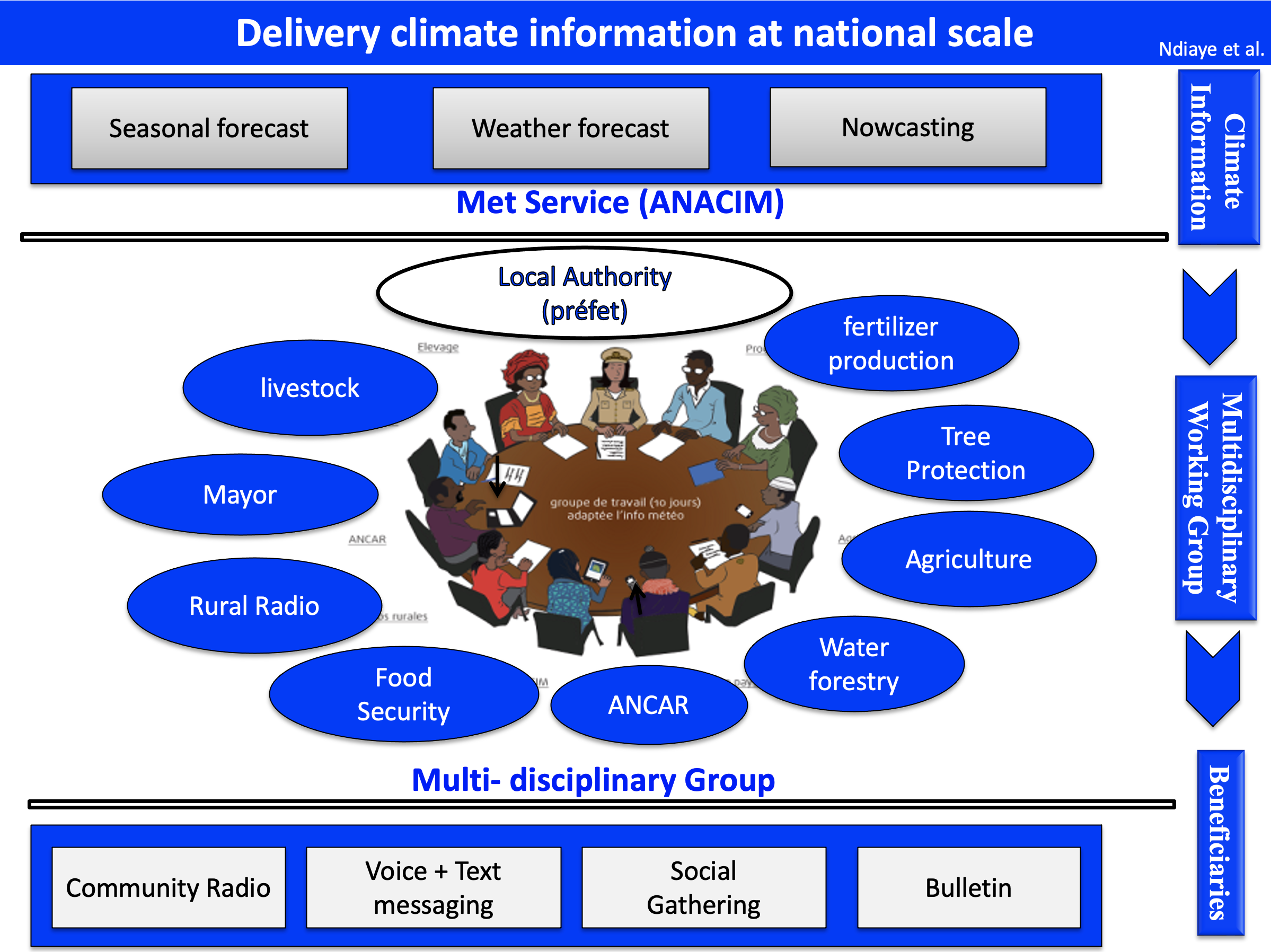
 - Indicates paper has been withdrawn from meeting
 - Indicates an Award Winner