
Using the extensive observational networks including the New York State Mesonet network, Automated Surface Observing Systems (ASOS), and radar datasets, we determined that the City experiences positive anomalous temperature during the 1pm to 2pm time of the day due to the urban heat island effect which may have influence in precipitation processes. Fourteen (14) extreme precipitation events were identified from 2018 to 2023 summer seasons (April-October). These extreme precipitation events recorded precipitation of more than 56 mm (i.e. 99th percentile of total precipitation) within 1 hour causing major damages in most cases. We have critically examined two of these 14 extreme precipitation events, namely 18 September 2018 (case 1) and 18 July 2023 (case 2), using various observational datasets. Spatial distribution of precipitation, and wind speed with wind direction for both the events have been presented in the provided figure. The storm of September entered the City between 1pm and 1:30pm intensified a large-scale weather event, resulting in about 25 mm of rain within just 30 minutes in the City. Precipitation was intensified in the afternoon mainly due to very elevated surface temperature (8.7 °C) over the City compared to the nearest rural weather station before the occurrence of the event, which is due to the urban heat island effect. In the Case 2 precipitation event, the City's influence resulted in the bifurcation of precipitation patches around the City, with approximately 60 mm of rainfall falling in just one hour. The variation of potential temperature with height suggests the presence of an unstable atmosphere and a strong local updraft over the City prior to precipitation. This research highlights the critical role of urbanization in exacerbating extreme precipitation events, particularly in densely populated cities like New York City. The findings underscore the urgent need for improved urban planning, infrastructure development, and early warning systems to mitigate the risks associated with urban flooding.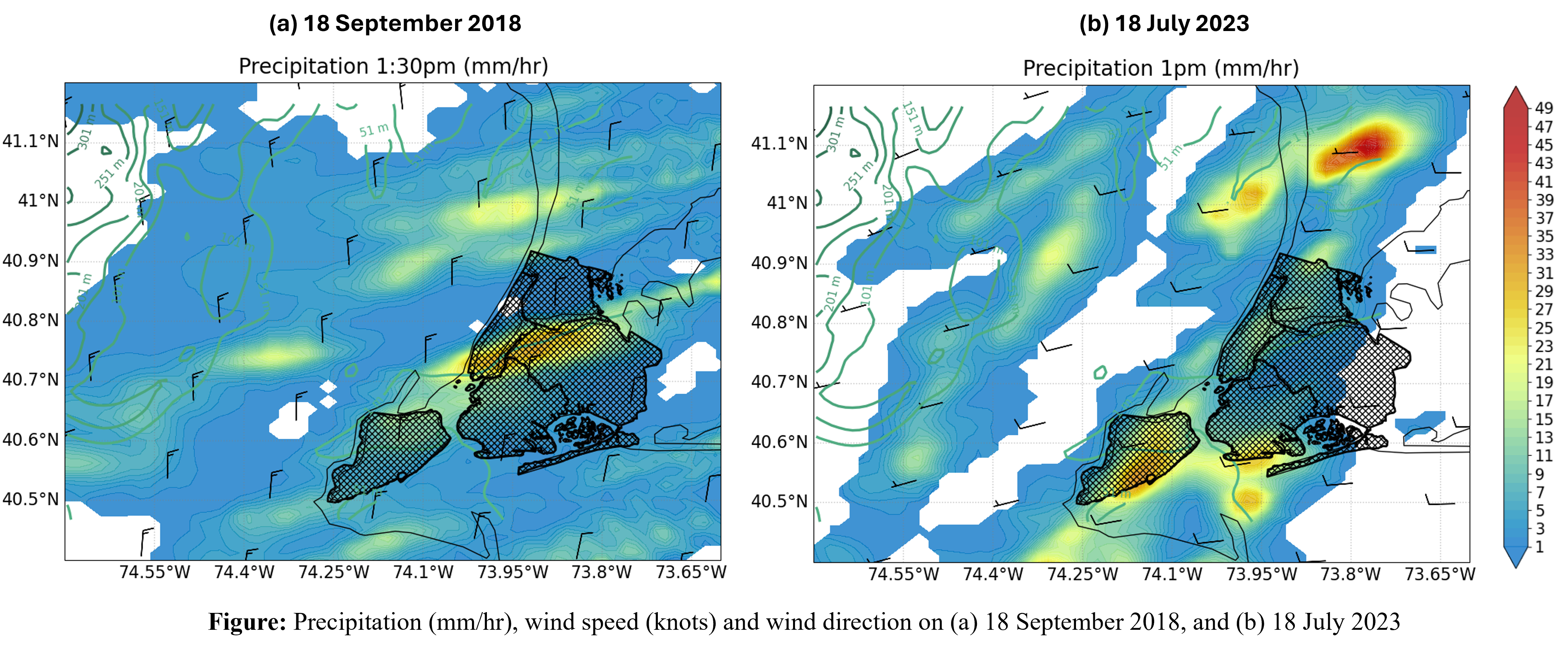
 - Indicates paper has been withdrawn from meeting
 - Indicates an Award Winner