
Tuesday, 14 January 2025: 4:30 PM
243 (New Orleans Ernest N. Morial Convention Center)
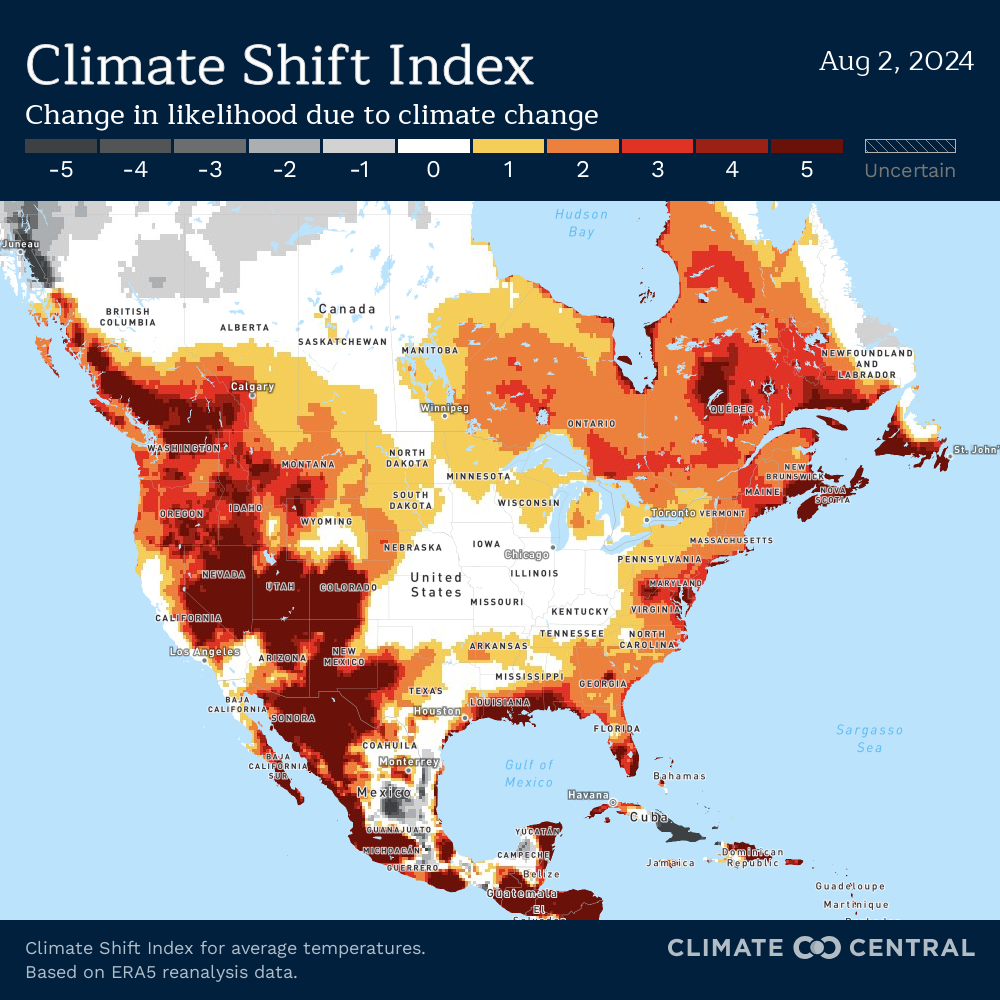
Attribution of extreme weather to climate change is now two decades old. Over that time, the techniques of attribution science have progressed to the point where robust calculations of how climate change has made heat events more likely or more severe can be done rapidly and automatically. Here we describe the Climate Shift Index system for daily attribution of heat and its impacts. For a given temperature, either 2m air temperature (either from ERA5 reanalysis or the GFS forecast) or sea surface temperature (OISST), the system calculates how much more or less likely that temperature is in the current climate compared with a counterfactual climate without human-caused warming. Likelihood ratios allow users, especially weather casters and journalists, to confidently link unusual conditions or extreme weather events with climate change. The system also computes an estimate of what the observed temperature would be in the counterfactual climate. The counterfactual temperature is defined as the temperature in the counterfactual climate that occurs with an exceedance probability equal to the probability of the observed temperature in the modern climate. Counterfactual temperatures provide a pathway for quantifying the influence of climate change on temperature-related processes such as tropical cyclone intensity, heat-related mortality, and coral bleaching.
 - Indicates paper has been withdrawn from meeting
 - Indicates an Award Winner