
This study employed a comprehensive approach, integrating high-resolution WRF-LES simulation, computational fluid dynamics modeling (CFD), and wind tunnel experimentation, to achieve a quantitative understanding of the drag coefficients and the resultant wind-induced forces acting on a variety of tower structures under realistic wind conditions. These drag coefficients were then incorporated into a machine learning-based failure prediction model, enhancing its ability to represent and predict tower performance under extreme wind loads.
The CFD simulations, validated through wind tunnel experiments, offered insights into the aerodynamic behavior exhibited by the simulated tower designs when subjected to realistic wind conditions. By replicating the complex flow patterns that impact the towers, these simulations underscored the role of the drag coefficient in quantifying the wind-induced forces that these structures endure. The agreement observed between the simulated and experimental drag coefficients validated the accuracy of the CFD models, thereby reinforcing their contribution in assessing the vulnerability of diverse tower designs to the detrimental effects of wind-induced damage.
The integration of these findings into the failure prediction model, gave a sense of the actual loads happening at the towers to the machine learning model, successfully enhancing the predictive capabilities of a power tower failure model. The prominence of the drag coefficient in the feature importance analysis (Figure 3) underscores its critical role as a key predictor of tower failure. This revelation accentuates the potential of utilizing drag coefficients not only as a design parameter but also as a fundamental feature in machine learning models for predicting structural vulnerabilities.
These findings underscore the value of drag coefficients not only in structural design but also in enhancing the predictive capabilities of machine learning models for power grid resilience. By incorporating this critical parameter, we can develop more robust models and ultimately strengthen power grids against the destructive forces of hurricanes and other high-wind events.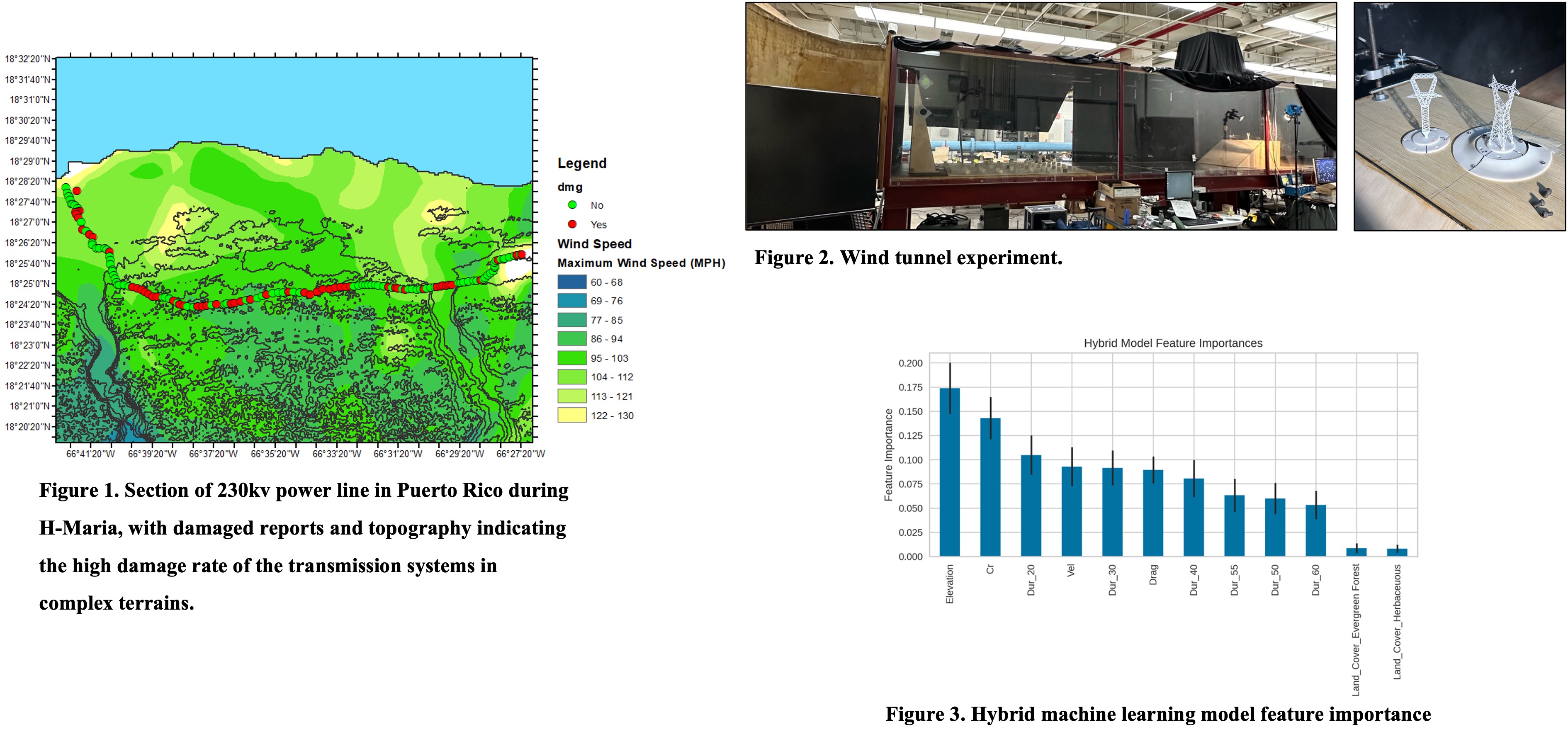
 - Indicates paper has been withdrawn from meeting
 - Indicates an Award Winner