
Through multiple field experiments, the RFSonde has demonstrated the effectiveness and repeatability of the methodology by comparing both co-polar and cross-polar radiation patterns of X- and S-band weather radars measured in different dates. However, these are experimental evaluations, not suitable for absolute measurement error quantification. A holistic method to measure the absolute error of the UAS-based instrument needs to be developed. This would allow a requirement-driven design of the UAS system to produce antenna pattern measurements within prescribed measurement precision (e.g., 0.1 dB within true power value or 2° from true phase). Therefore, a comprehensive simulator that emulates the RFSonde flights together with simulated antenna pattern has been developed. The results of these simulated measurements show the absolute errors that can be expected from the RFSonde's measurements under varying wind conditions, target tracking accuracy, navigational accuracy of the UAS, etc., offering a method for estimating potential errors in real-world operations. This simulator has been essential in verifying the accuracy of the RFSonde instrument, providing insights to address systematic errors and levels of confidence in its ability to capture precise antenna radiation patterns.
These findings establish a solid foundation for the continued utilization of UAS in on-site antenna pattern measurements, paving the way for the development of methodologies and prescriptions to calibrate and validate polarimetric observations in radar systems for weather research and operational purposes.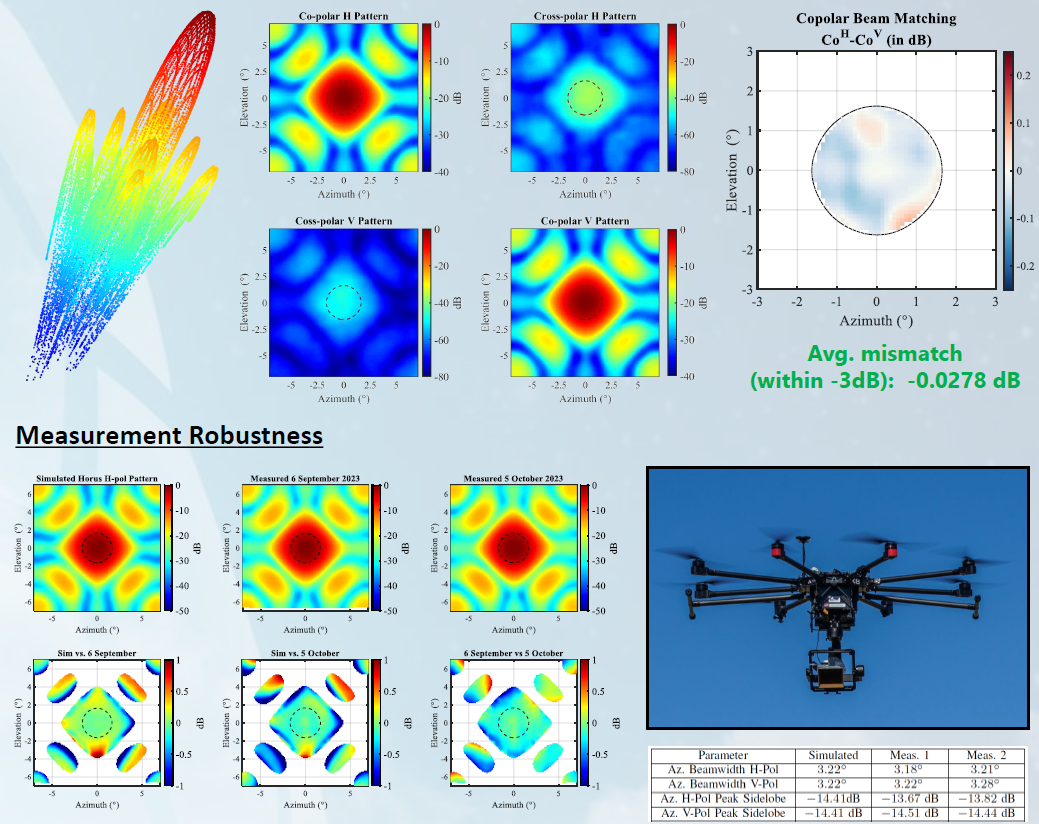
 - Indicates paper has been withdrawn from meeting
 - Indicates an Award Winner